Law and JusticeArticleYoung Journalist Program
All are Jane Does, Until no is Jane Doe.
This article will remind you and put forward my personal opinions on the situations in Afghanistan and The Cornell University.
By Shubhi Gupta · student
Published 7 min read
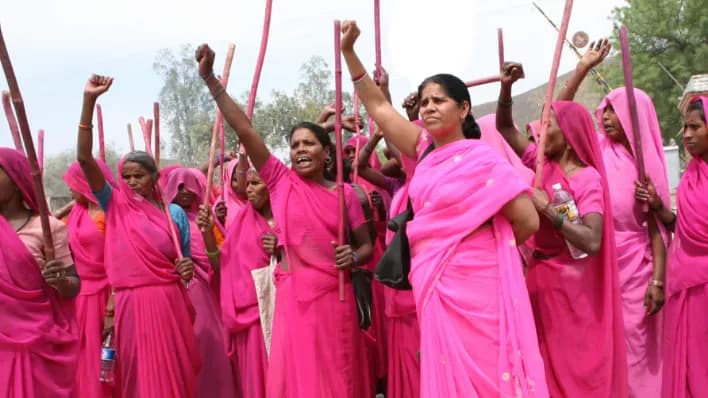
Phew! I just survived another day in India, or you could say I survived living hell and terror. I wish I were joking, but what can we do? Everyone says, "not all men!" But why is it always a man? Why does almost every woman have a tragedy to tell? Why is it that we have to live in constant terror, keys between our fingers, pepper spray in our bags, and 112/911 on speed dial?
I decided to go out to buy some snacks from a shop 5 minutes away. Now I am walking outside in a long coat, baggy jeans, and a baseball cap in the middle of July, hoping I'm covered enough that no one's eyes linger, and that even if I'm gone, no one will blame me and say, "What was she wearing?" I have my keys between my fingers, the other hand clutched around my bag, hoping no one stops and kidnaps me or throws something horrendous, and then I realize I forgot the thing I was here for! Why is it that women have to live in such terror?
Imagine working towards something your entire life, only to be told that you are not allowed to achieve it simply because you are a girl. Imagine having dreams of becoming a doctor, a teacher, or an engineer, but being denied the opportunity to even try. For many girls in Afghanistan, this is not just an imaginary situation. It is their reality.
We often hear people talking about women's rights, equality, and how far society has progressed. We celebrate achievements and talk about creating a better future. But I sometimes wonder how much progress we have really made when so many women are still fighting for things that should have been basic rights in the first place.
Afghanistan:
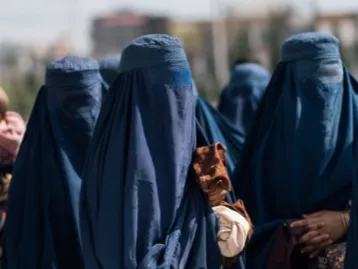
Since the Taliban returned to power in August 2021, the lives of Afghan women and girls have changed drastically. Girls have been prevented from continuing their education beyond the sixth grade, women have been excluded from universities and restrictions have affected their ability to work, travel and participate in public life.
But I think there is something about these statistics that we often overlook. We talk about thousands of girls being denied education, but we rarely stop to think about what that actually means for each individual.
Think about a girl who has spent years studying because she wants to become a doctor. She has probably imagined her university life, the career she wants and the person she hopes to become. Then, suddenly, she is told that she cannot continue her education. Not because she is incapable, not because she has failed, but simply because she is a girl.
It is difficult to imagine what that must feel like.
Education is not just about books, examinations and certificates. It gives people choices. It allows them to become independent and build futures of their own. When girls are denied education, they are not just missing lessons; they are losing opportunities that could have shaped their entire lives.
And the restrictions do not end there. Rules concerning women's clothing, public behaviour and travelling with a male guardian have also affected their independence. Even ordinary activities, such as travelling to work or accessing essential services, can become difficult.
What bothers me most is that these women are not asking for anything extraordinary. They want to study, work, support their families and make decisions about their own lives. Why should these things be so difficult?
Cornell University:
Women's safety is not only an issue in countries where governments restrict their freedoms. It is also something we need to discuss in schools, universities and other institutions that promise to protect the people who depend on them.
The controversy surrounding Cornell University is one example.
In September 2026, a former Cornell student, identified as Jane Doe in a civil lawsuit, filed a lawsuit alleging sexual assault involving seven members of the university's Chi Phi fraternity. The lawsuit also questioned Cornell's response to the incident. These remain allegations and should not be confused with established criminal findings.
Cornell stated that its investigation resulted in expulsions and suspensions. The university also disputed claims that essays had been the sole disciplinary consequence, explaining that privacy laws prevented it from disclosing individual disciplinary outcomes.
However, concerns about the university's response continued. Demonstrations called for greater transparency and stronger protection for survivors. In October 2026, Cornell appointed former acting US Attorney General Sally Yates to lead an independent review of its handling of the case.
There is something important we should consider here. When a student approaches a university with a serious complaint, they are placing their trust in that institution. They expect to be heard, treated with dignity and given a fair investigation.
That trust should mean something.
A university cannot simply call itself a safe place and expect everyone to believe it. It has to prove that it takes students' concerns seriously. This means having proper procedures, providing support and being willing to admit when something needs to change.
At the same time, every allegation deserves a fair investigation. Supporting someone who comes forward does not mean assuming that every accusation has already been proven. It means taking their concerns seriously while respecting fairness and evidence.

Two different situations, one important question
Afghanistan and Cornell are very different situations, and I don't think it would be fair to compare them as though they involve the same kind of injustice.
However, looking at both makes us think about the importance of accountability.
In Afghanistan, women's freedoms are being restricted by the authorities governing their lives. At Cornell, questions have been raised about whether a university responded appropriately to allegations of sexual violence.
Both situations remind us that having rules and policies is not enough. What matters is whether people are actually protected.
We can introduce hundreds of policies and make thousands of promises, but what is the point if the people who need protection cannot depend on them?
I believe institutions should be judged by their actions, not just by the promises they make. And when something goes wrong, they should be willing to examine their decisions instead of simply trying to move past the criticism.
Jane Doe: More than just a name
The term 'Jane Doe' is commonly used in the United States to protect the identity of a woman whose name is not publicly disclosed in legal proceedings.
But I think it is important to look beyond those two words.
When we read about a Jane Doe in a newspaper, it is easy to see the situation as just another legal case. We read the headline, learn a few details and move on. But there is a person behind that name. Someone whose privacy matters and whose experiences deserve to be treated with respect.
There is also the issue of victim-blaming.

Too often, when women speak about sexual violence, the conversation shifts towards questioning their choices and behaviour. People ask why they were there, why they trusted someone, or why they did not speak earlier.
But why does the person reporting an incident so often end up having to defend themselves?
Of course, allegations must be investigated fairly, and evidence matters. But that should never be an excuse to humiliate someone or automatically dismiss their concerns.
I think we need to understand that being heard and being treated with dignity should not depend on whether someone is comfortable sharing their entire personal life with the world.
Nobody should have to sacrifice their privacy just to have their concerns taken seriously.
Jane Doe is not just a name for us women now; it's our identity
WE ALL ARE JANE DOE, UNTIL NONE OF US IS JANE DOE
WE ARE NOT FREE UNTIL EVERY. SINGLE. ONE OF US IS FREE
Make the world safe for us women, make the world safe for us girls, make the world better for the children, the toddlers who can't speak for themselves.
We have to use our voices for those who can't.
Because just because we have rights today doesn't mean we will have rights tomorrow.
But until then, stay safe, because not all men, but always a man.
About the author
Shubhi GuptaYoung Journalist Program
student
Writes about: [email protected]
I am a middle school student, passionate about raising awareness on women's safety and rights and corruption, and i want to participate in improving my India. I AM JANE DOE; WE ALL ARE JANE DOE UNTIL NONE OF US ARE JANE DOE. Jai Hind Jai Bharat. Country over Religion always.
Get featured on India News Grid
Register now