3I/ATLAS: The third confirmed interstellar visitor
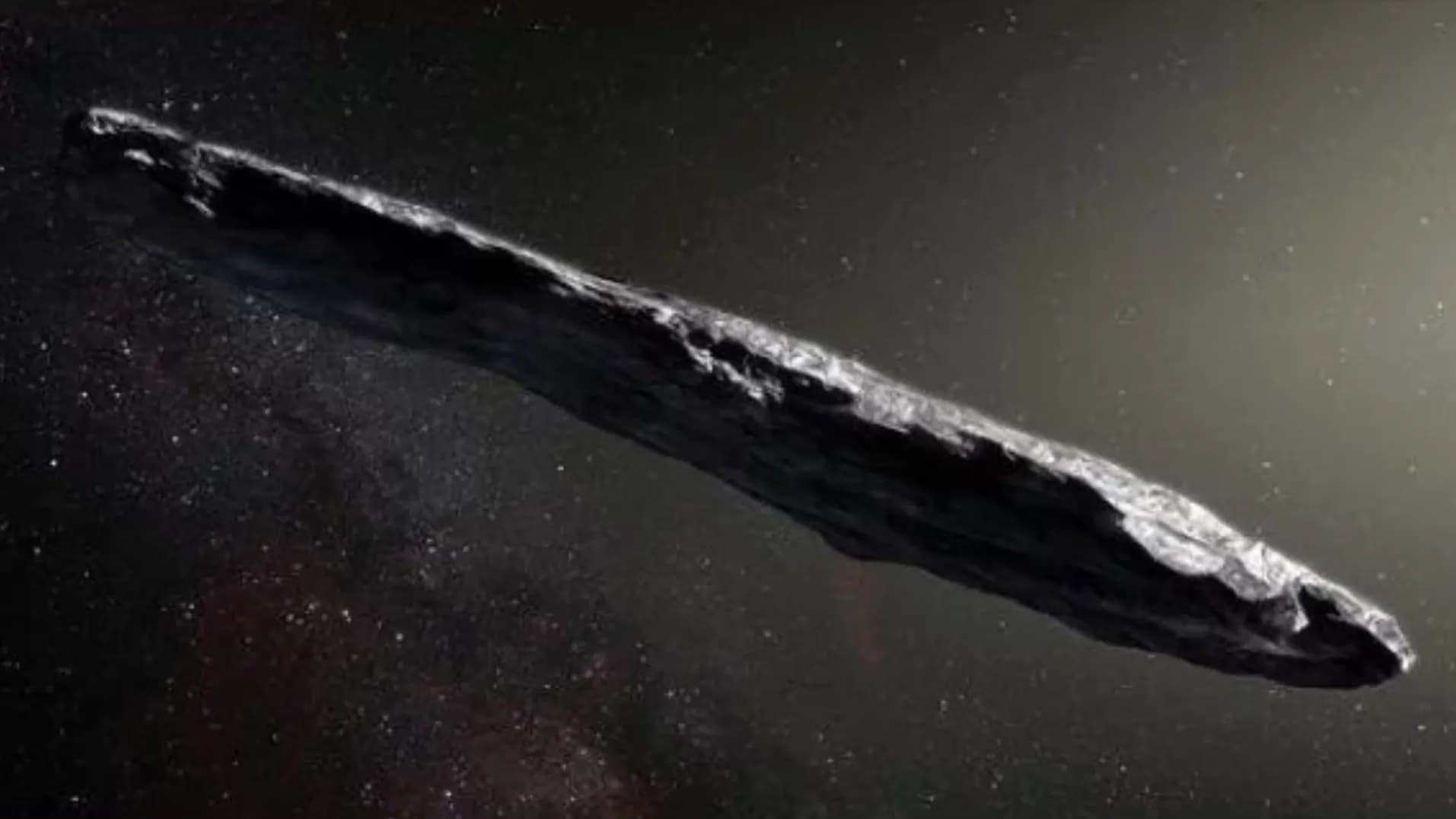
The interstellar comet 3I/ATLAS during its 2025 flyby
Discovery & Classification
Discovered on 1 July 2025 by the ATLAS sky-survey in Chile, 3I/ATLAS is the third known object from outside our Solar System to pass through — following 1I/ʻOumuamua and 2I/Borisov. Its orbit is hyperbolic (eccentricity > 1), confirming its interstellar origin.
Its closest approach to the Sun (perihelion) occurred on 29 October 2025 at ≈ 1.36 AU, and it will come no closer than ~1.8 AU to Earth — meaning no threat to our planet.
Key Physical & Orbital Characteristics:
Origin: presumably from the Milky Way’s thin or thick disk, possibly over 7-10 billion years old.
Nucleus: estimated diameter is uncertain but likely less than ~5 km, surrounded by a coma of dust and gas.
Orbit: extremely high eccentricity, moving too fast to be bound by the Sun.
What Makes It Special:

As an interstellar visitor, 3I/ATLAS offers a rare chance to study material formed outside our Solar System — a direct sample of alien space chemistry.
Observations indicate unusual composition: high carbon-dioxide levels, low water ice relative to other comets, strong dust emission and nickel/cyanide gas signatures.
Its size appears larger than previous interstellar objects, making it the largest known ISO so far.
Observational Highlights & Scientific Importance:
Imaged by the Hubble Space Telescope on 21 July 2025, revealing a dusty tail and sun-facing plume.
Observed by multiple facilities including the Very Large Telescope, James Webb Space Telescope, and Vera C. Rubin Observatory, enabling detailed investigation of its composition and behavior.
Because of its interstellar trajectory and composition differences, 3I/ATLAS is a key object for understanding how material from other star systems may differ from our own.