Black Holes: The Mysterious Monsters of the Universe
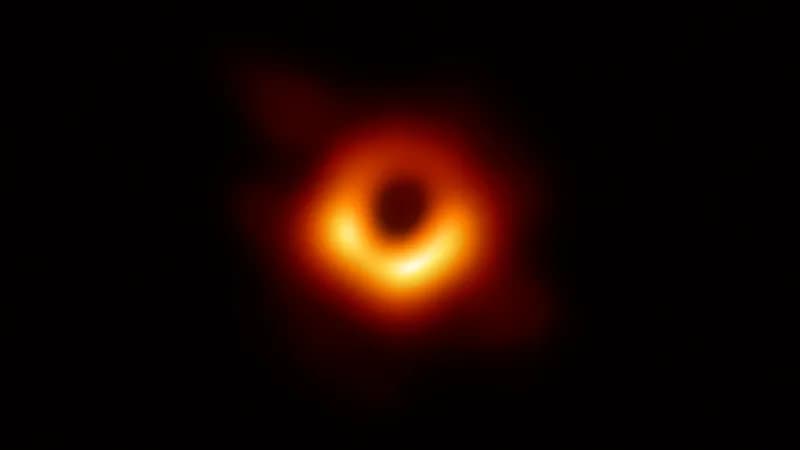
First picture of a black hole, captured using Event Horizon Telescope
Black holes are among the most fascinating and misunderstood objects in the universe. They’re not actually “holes,” but regions in space where gravity is so strong that nothing—not even light—can escape.
To understand why black holes trap even light, we need to first understand a concept called escape velocity. Escape velocity is the minimum speed an object needs to escape the gravity of a planet or star—without falling back. For example, if you launch a rocket from Earth, it must reach a speed of about 11.2 km/s (40,320 km/h) to overcome Earth’s gravity and enter space. If it goes slower, gravity will pull it back down.
In the case of a black hole, the mass is so dense and the gravity so intense that its escape velocity is greater than the speed of light — which is about 300,000 km/s. Since nothing in the universe can travel faster than light, that means nothing can escape a black hole once it crosses a certain point — known as the event horizon.
This is why black holes appear completely black — they don’t reflect or emit any light, making them invisible against the backdrop of space. We can only detect them by how they affect nearby matter or light.
In 2019, scientists captured the first-ever image of a black hole using the Event Horizon Telescope—a historic moment in astrophysics. What appeared was a glowing ring of gas surrounding a dark shadow, located in the center of galaxy M87, over 55 million light-years away.
Most black holes are born from the dramatic death of massive stars. When a star much larger than our Sun runs out of fuel, it can no longer hold itself up against the force of its own gravity. The outer layers explode in a massive event called a supernova, and the core collapses inward.
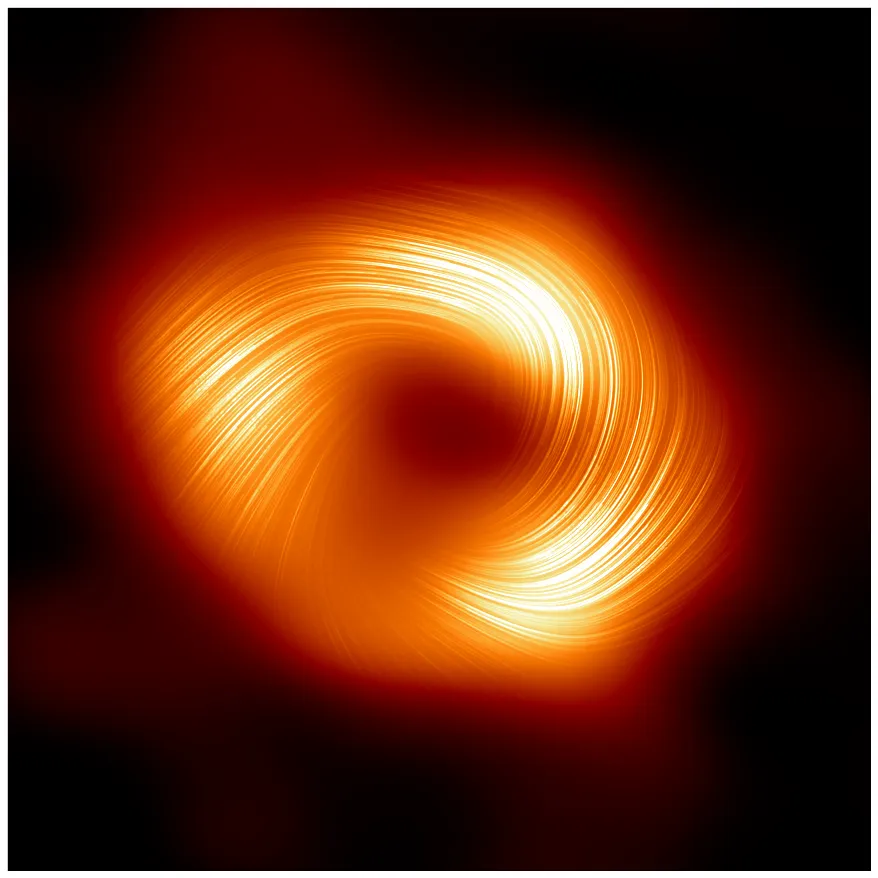
If the remaining core is heavy enough, it keeps collapsing — shrinking down into an infinitely dense point known as a singularity. The gravity becomes so strong that it creates a black hole. Not all stars become black holes — only those with enough mass after collapse can cross this threshold.
Surrounding every black hole is a boundary called the event horizon. Think of it as the invisible edge of the black hole — the point where escape becomes impossible.
If anything — a star, a spacecraft, even light — crosses the event horizon, it’s gone forever. No signal or information can escape from beyond this point. To an outside observer, time appears to slow down near the event horizon, adding to the mystery of black holes.

This is what makes them so fascinating and terrifying — they represent a place in the universe where our current understanding of physics breaks down.