Digital Arrest Scams in India: How They Work and What to Do If You Receive a Call
Digital arrest is not recognised under Indian law. Suspicious impersonation calls and financial demands should be reported promptly.
The call may begin with a parcel you never sent, a SIM card you supposedly misused or a bank account allegedly connected to money laundering. Within minutes, the caller transfers you to someone posing as a police officer, a CBI official or another government authority.
The person may know your name or other personal details. They may show an identity card, an arrest warrant or a room designed to resemble a police station. You are told to stay on video, speak to nobody and transfer money to prove your innocence.
This is not an investigation. It is a digital arrest scam.
India’s Ministry of Home Affairs has clearly stated that there is no concept of “digital arrest” under Indian law. Police officers and investigating agencies do not place people under arrest through video calls or demand transfers to a so-called safe account.
What Is a Digital Arrest Scam?
A digital arrest scam is a form of impersonation fraud. Criminals pretend to represent organisations such as the police, Central Bureau of Investigation, Enforcement Directorate, Narcotics Control Bureau, Reserve Bank of India, telecom companies or courier services.
According to an Indian Cyber Crime Coordination Centre advisory, scammers may accuse a person of sending illegal goods, misusing an Aadhaar-linked SIM card, receiving unlawful funds or becoming involved in money laundering or other criminal activity.

The accusation is designed to cause panic before the recipient has time to check whether the story is genuine.
How the Scam Usually Unfolds
Although the opening story can change, the pattern is often similar:
An unexpected call or message arrives
The caller claims to represent a courier company, telecom provider, bank, police department or government agency.
A serious accusation is introduced
You may be told that your identity, phone number, parcel or bank account is linked to drugs, illegal transactions or another criminal offence.
The call is transferred to a supposed official
A second person may appear in uniform or sit in front of a police-style background. The caller may present a fabricated identity card, warrant or case document.
You are isolated
The caller orders you not to contact relatives, your bank, a lawyer or the local police. They may insist that you remain visible on a video call for several hours.
Money is demanded
You are instructed to transfer funds for “verification”, “security”, “account inspection” or “case closure”. The caller may promise that the money will be returned after an inquiry.
That final demand reveals the real purpose of the call: financial fraud.
Why These Calls Can Feel Convincing
Digital arrest scams do not always look amateurish. Fraudsters may use spoofed phone numbers, copied logos, official-sounding language and carefully prepared video-call backgrounds.
Some callers already possess fragments of personal information obtained through data leaks, public profiles or earlier phishing attempts. Knowing your name, address or identification details does not make the caller genuine.
The pressure is psychological. The scammers want you to feel frightened, isolated and unable to pause. Secrecy, urgency and threats of immediate arrest are used to prevent independent verification.
In a 2026 case announced by the CBI, a victim was allegedly coerced into transferring ₹25.65 lakh after being threatened through a digital arrest scheme. The agency again advised people not to disclose account details, passwords or one-time passwords to unknown callers. Read the official CBI release through the Press Information Bureau.
Warning Signs You Should Not Ignore
End the conversation and verify independently if a caller:
claims that you have been placed under “digital arrest”;
orders you to remain on a phone or video call;
prevents you from contacting family members or local authorities;
demands money to avoid arrest or clear your name;
asks you to transfer funds to a “safe”, “secure” or “verification” account;
requests an OTP, PIN, password or remote access to your device;
threatens immediate action unless you comply;
sends an arrest warrant or official-looking document through a messaging app;
asks you to install an unfamiliar application or share your screen.
A convincing uniform, document or video background is not proof of authority.
What to Do While the Call Is Happening
First, end the call. You do not need the caller’s permission to disconnect.
Do not transfer money, share banking information, disclose an OTP or install an application suggested by the caller. Avoid opening unfamiliar links or files.
Call a family member or another trusted person. Speaking to someone outside the conversation can break the pressure that scammers are trying to create.
If the caller claims to represent an authority, locate that organisation’s official telephone number yourself. Do not use a verification number provided by the suspicious caller.
Save useful evidence if you can do so safely. This may include the caller’s number, screenshots, messages, email addresses, payment instructions and documents sent to you. Do not continue engaging with the fraudster simply to gather more information.
What to Do If You Have Already Transferred Money
Act immediately. A quick report may help banks and law-enforcement agencies trace or restrict the movement of funds, although reporting cannot guarantee recovery.
Contact your bank or payment provider and explain that the transaction resulted from suspected fraud.
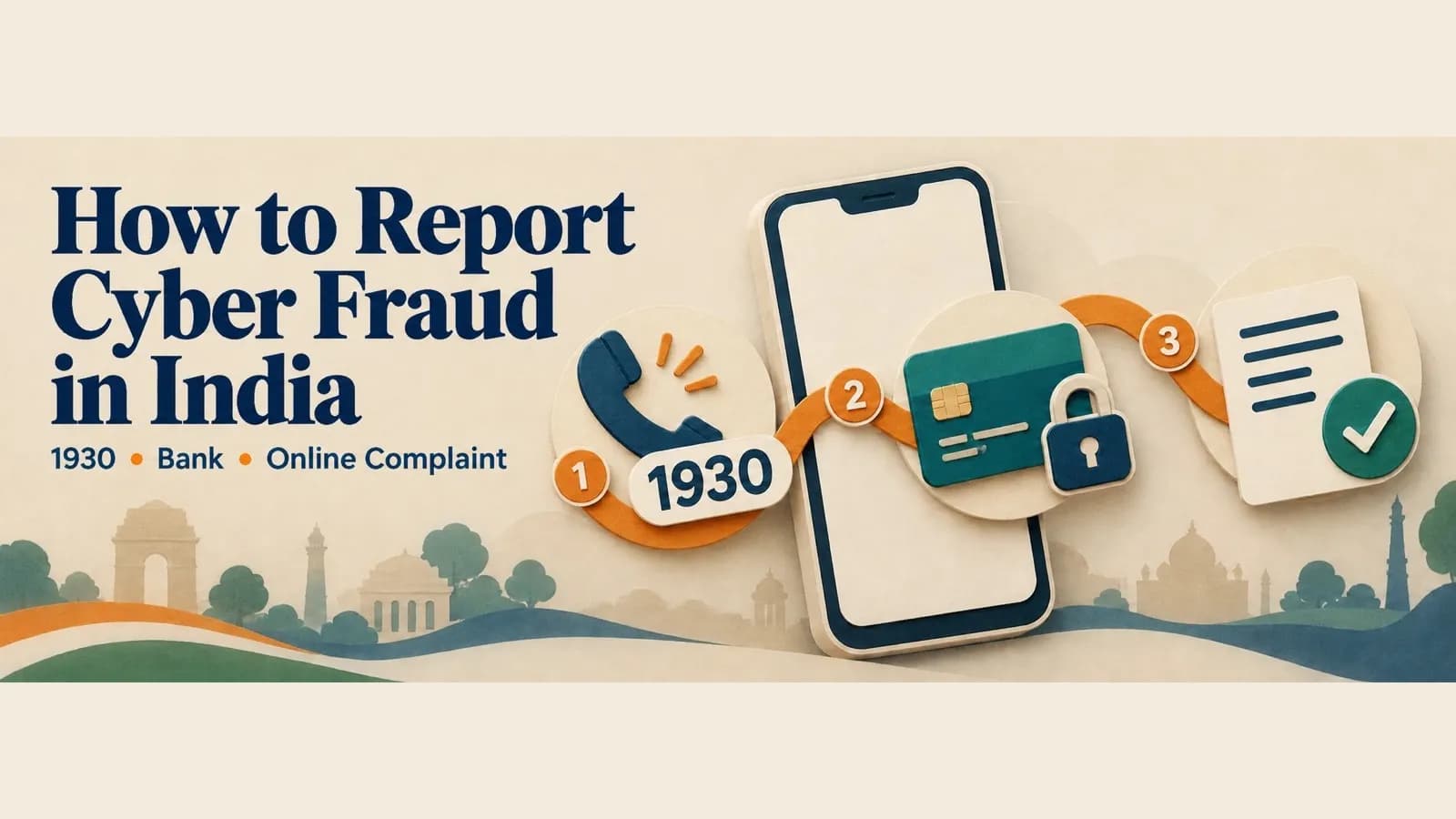
Call India’s cybercrime helpline on 1930.
File a complaint through the official National Cyber Crime Reporting Portal.
Preserve transaction references, account details, phone numbers, chats, emails and screenshots.
Contact your nearest cybercrime police station or local police if additional assistance is required.
The Ministry of Home Affairs advises victims to report cyber financial fraud immediately through 1930 or the national cybercrime portal. Complaints submitted through the portal are handled by the relevant State or Union Territory law-enforcement agencies.
Where to Report a Suspicious Call When No Money Was Lost
If you receive a suspected fraud call, message or WhatsApp communication but have not lost money, it can also be reported through Chakshu on the Department of Telecommunications’ Sanchar Saathi portal.
Chakshu is intended for reporting suspected fraudulent communications. It does not replace a formal cybercrime complaint when money has been transferred or a person has already become a victim. In those situations, contact 1930 and use the National Cyber Crime Reporting Portal without delay.
Talk About the Scam Before Someone in Your Family Receives the Call
Digital arrest scams rely on silence and fear. A short family conversation can reduce both.
Agree on a simple rule: no family member will transfer money during an unexpected legal, police or banking call without first speaking to another trusted person. Senior citizens and people who live alone should have someone they can contact immediately.
It is equally important not to shame a person who has been deceived. These schemes are deliberately designed to create panic. A calm response makes it easier to report the incident quickly and preserve evidence.
Stop, Disconnect and Verify
No genuine authority can establish your guilt during an unsolicited phone call. A caller cannot legally keep you under arrest through a video connection, and transferring money does not prove your innocence.
If a call combines a serious accusation, enforced secrecy and a demand for funds, stop the conversation. Disconnect, verify the claim independently and report the communication through the appropriate official channel.
This article is intended for public awareness and does not constitute legal advice. Reporting procedures and official services may change; always confirm information through government websites.