India’s Satellite Internet Push Needs More Competition
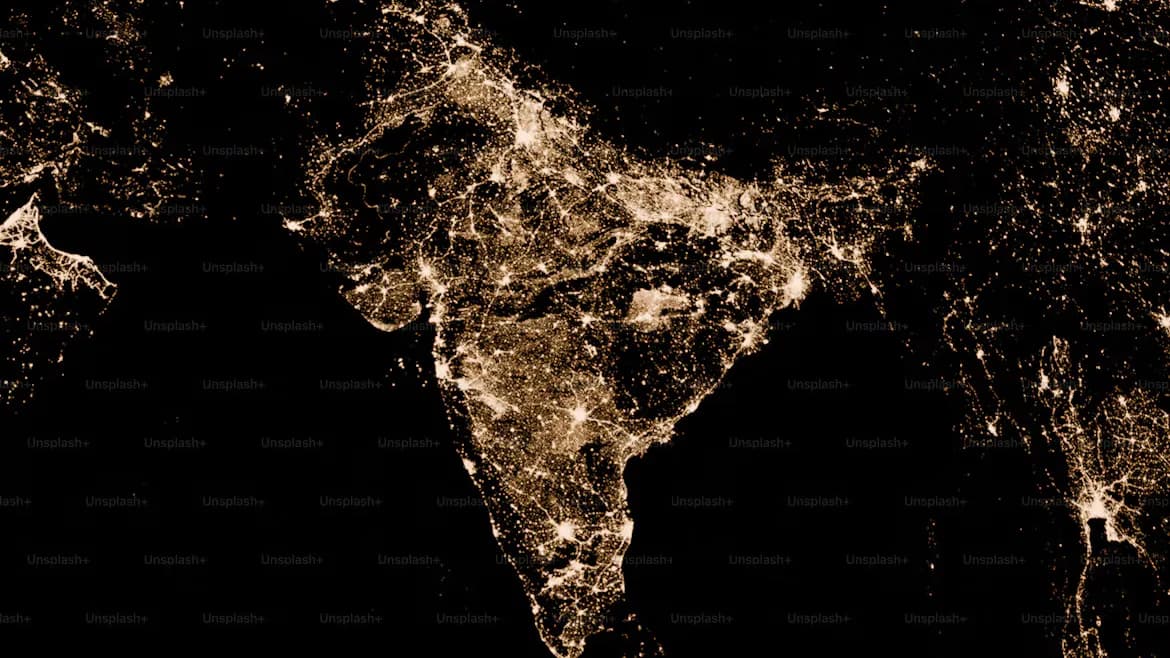
India from space · Image: Insaanu Studio / Unsplash
India’s internet revolution has a blind spot: the places where building a network is hardest are often the places where stable connection matters the most. Laying fiber across hilly terrain or extending mobile networks to remote villages can be expensive, leaving people with fewer options for reliable internet. Satellite broadband offers another way to bridge the gaps. But whether Indian consumers benefit will depend on how willing policymakers are to let providers compete.

India is set to open its door for three major players into India’s Internet Market: Starlink, Reliance Jio’s satellite and Eutelsat OneWeb. All three have obtained satellite communication licenses from the Department of Telecommunications (DoT), however commercial services are yet to be commenced. Spectrum assignment and the completion of technical requirements and security remain necessary before commercial rollout. The satellite technology offers a reliable alternative to underserved communities where the expanding mobile networks is expensive and challenging. This expansion opens better options and reliable internet access to consumers, regardless of their location.
Students in remote Himalayan villages should have access to online learning the same way as those in urban cities, just like rural health centers should be able to rely on telemedicine without being held back by unreliable connection. Satellite broadband can help overcome those geographical barriers that make conventional connections difficult to provide; however, coverage, network, capacity and equipment costs and weather conditions can affect its availability and reliability. For farmers and small businesses, better connectivity can also mean easier access to online markets and digital payments. Whether these benefits reach consumers depends on equipment cost, service reliability and subscription prices, and also shows why expanding consumer choice matters.
Chile is a good example of how satellite technology can address different connectivity needs. Chilean authorities in 2021 worked with starlink to pilot satellite connectivity in remote communities, including schools in remote regions on Sotomó and Caleta Sierra. Recently Chile has expanded satellite-to-mobile connectivity through a partnership between telecom operators Entel and Starlink. The initiative aimed to improve access to education and digital services in underserved regions. Recently Chile has expanded satellite-to-mobile connectivity through a partnership between telecom operators Entel and Starlink allowing compatible mobile devices to connect to satellites in areas without terrestrial network coverage. The major takeaway for India in these cases is that satellite technology can complement existing networks and extend connectivity where traditional infrastructure falls short.
The challenge is ensuring that regulation enables competition rather than delaying it. The Telecom Regulatory Authority of India (TRAI) released its new recommendations on satellite communications network authorization and spectrum assignment on November 5, 2026. These recommendations address the framework for satellite service providers, including authorization categories and use of spectrum. However, they are recommendations to the government, not rules that are being implemented. The distinction matters because commercial deployment depends on the government's subsequent decision and completion of necessary approvals.
There are valid questions about the national security, spectrum management and obligations satellite operators should meet. Satellite services must comply with Indian law and service providers should meet proper security requirements. Starlink’s approval process sheds light on this complexity: despite receiving its DoT license in May 2025 and space sector clearance in July 2025, it continued to face outstanding security and other regulatory hurdles. These checks serve valid, however uncertain approval timeline, overlapping procedures and uncertainty over technical requirements can make it challenging for companies to plan commercial deployment. But regulation should be proportionate, consistent and transparent. Lengthy approvals and unpredictable costs can discourage investment and delay arrival of services that could benefit consumers.
Competition is crucial because satellite internet is not cheap. Equipment costs and subscription fees may put it beyond many households' reach. That makes it essential to promote multiple service providers and viable business models rather than letting one company dominate the market. Competition will enable consumers to make sound decisions based on price, coverage and services. However, the push towards satellite broadband shouldn’t become an excuse to neglect terrestrial infrastructure. BharatNet, mobile networks and fibre connections remain essential to India’s digital ambition. Satellite services should complement these investments, fill the connectivity gaps and offer consumers alternatives where existing networks fall short.
India’s digital growth should not be measured by the number of people with internet connection, but whether the connection is stable, affordable and tailored to their specific needs. The government’s role is to establish clear rules, protect public interests and allow service providers to compete on merit. Connecting India’s underserved regions will require more than putting satellites into orbit. It’ll require a regulatory environment that allows innovation to reach consumers and give them freedom to choose.
Shrey Madaan, Indian Policy Associate, Consumer Choice Center