Lunar Eclipse: When the Earth Steals the Spotlight
Total Lunar Eclipse
On most nights, the Moon bathes in the Sun’s reflected glow, lighting up our skies in a soft, silvery hue. But once in a while, the Earth steps in, casting a shadow that turns this celestial spotlight into a cosmic drama — the Lunar Eclipse.
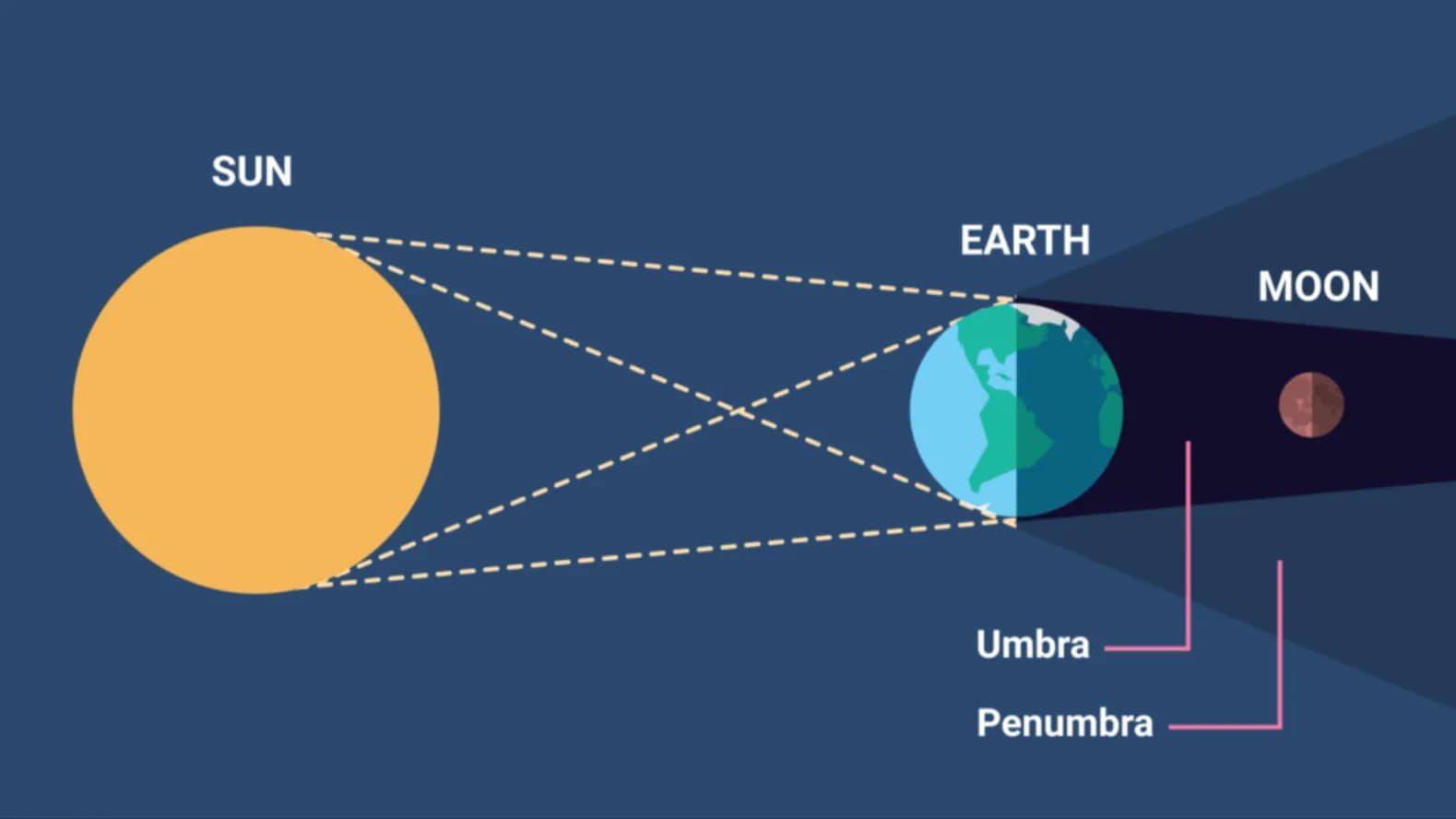
A lunar eclipse occurs when the Earth comes directly between the Sun and the Moon, blocking sunlight from reaching the Moon. This alignment can only happen during a Full Moon, and it results in the Earth casting its shadow — known as the umbra — on the lunar surface.
But unlike solar eclipses, lunar eclipses are safe to view with the naked eye and can be seen from anywhere on the night side of Earth, making them more accessible and awe-inspiring for skywatchers across the globe.
Not all lunar eclipses are created equal. Based on the degree of Earth’s shadow covering the Moon, there are three main types:
Penumbral Lunar Eclipse: The Moon passes through the Earth’s outer shadow (called penumbra). The Moon looks just a little bit dim. Many people don’t even notice it.

Partial Lunar Eclipse: A part of the Moon goes into the Earth’s darker shadow (called umbra), making part of the Moon look clearly dark.
Total Lunar Eclipse: The entire Moon goes into the umbra. During this, the Moon turns a reddish or copper color. That’s why it’s also called a “Blood Moon”.
Why Does the Moon Turn Red?
During a total eclipse, sunlight still reaches the Moon — but only after being filtered through Earth’s atmosphere. Shorter wavelengths (like blue) scatter away, while longer red and orange wavelengths bend around Earth and illuminate the Moon. This same phenomenon makes our sunsets and sunrises appear reddish.
The exact shade of red depends on atmospheric conditions. For instance, volcanic eruptions or high pollution can intensify the color, creating a hauntingly beautiful Moon.
Cultural Significance Through the Ages
For centuries, lunar eclipses have sparked myth, fear, and wonder. In ancient times, many cultures saw eclipses as omens or divine messages. The Incas believed a jaguar was attacking the Moon. Chinese myths spoke of celestial dragons devouring it. Meanwhile, in Hindu mythology, Rahu and Ketu, the shadow entities, are said to cause eclipses as part of a cosmic vendetta.
Today, eclipses serve not just as astronomical events, but as opportunities to connect with cultural heritage and science alike.
A lunar eclipse is more than just an astronomical alignment — it’s a moment to pause, look up, and remember that we are part of something vast, beautiful, and in motion.
A total lunar eclipse, also known as a "Blood Moon," will occur overnight on September 7–8, 2025. The eclipse will be visible across Asia, Australia, Africa, and Europe.