Best Winter Treks in India for 2026–27: Beginner to Moderate Routes
Winter Treks in India
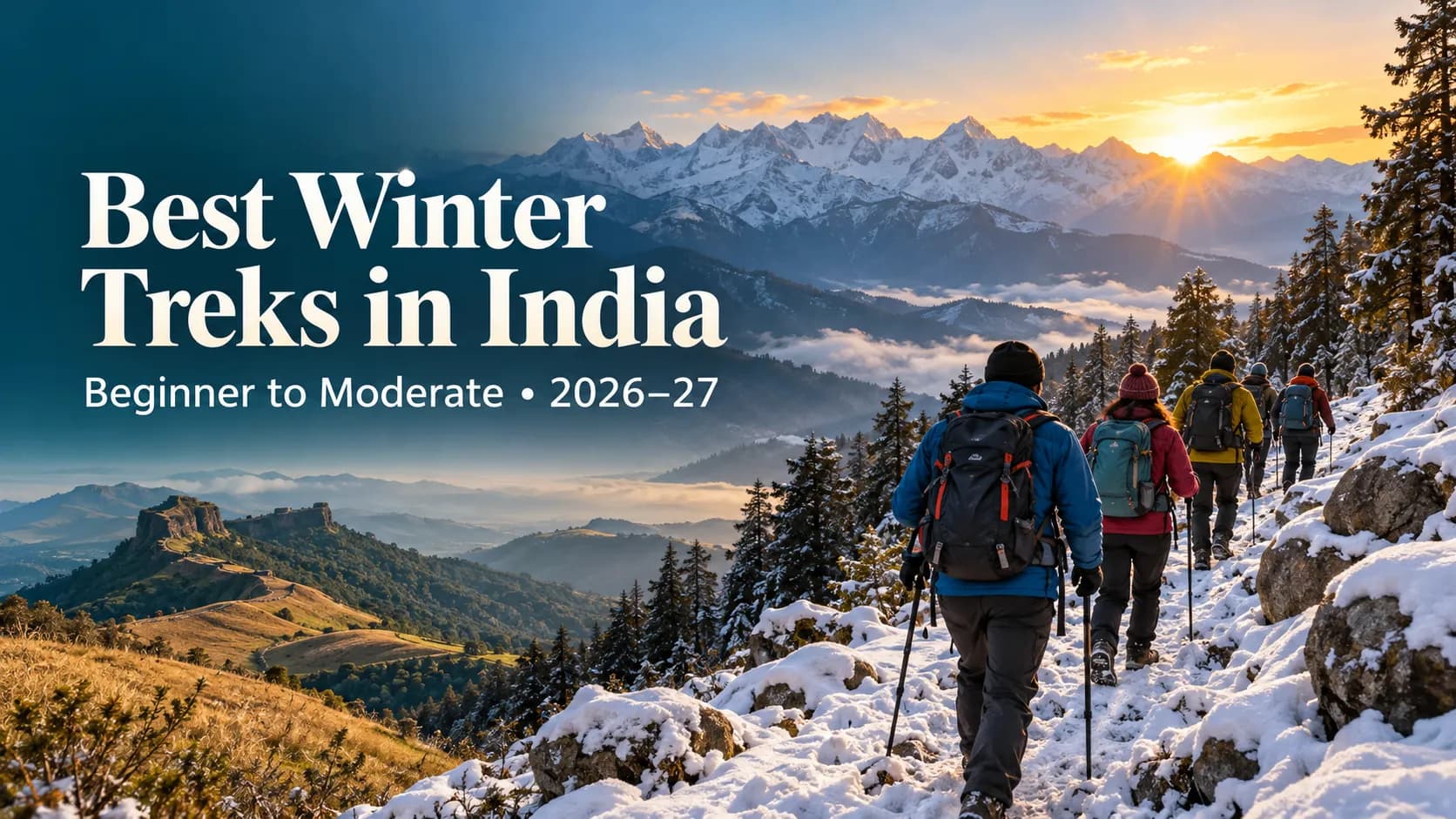
Winter changes India’s trekking landscape. Himalayan meadows turn white, Sahyadri forts become more comfortable to climb, and the Western Ghats offer cooler walking conditions.
But a popular “beginner trek” is not automatically easy in winter. Snow, ice, altitude, shorter daylight and sudden weather changes can make familiar routes demanding.
Here are seven winter treks to consider for the 2026–27 season, along with realistic difficulty levels, permit requirements and essential safety information.
North India
1. Gorson Bugyal, Uttarakhand
Suitable for: First-time trekkers and travellers staying in Auli
Difficulty: Beginner-friendly in suitable conditions
Altitude: Approximately 3,056 metres
Gorson Bugyal is a high-altitude meadow near Auli. Uttarakhand Tourism describes it as a roughly three-kilometre trek from Auli, with views of peaks such as Nanda Devi and Trishul in clear weather.
Its shorter distance makes it an approachable introduction to winter walking. However, fresh snowfall can conceal the trail, while compacted snow may become slippery.
Use a local guide when snow is present, check road and ropeway operations, and return before darkness.

2. Dayara Bugyal, Uttarakhand
Suitable for: Fit beginners attempting their first multi-day trek
Difficulty: Easy to moderate
Distance: Approximately 21 kilometres
Common bases: Raithal and Barsu
Dayara Bugyal combines forest trails, camps and broad Himalayan meadows. The official winter itinerary follows a six-day journey from Dehradun through Raithal, Gui and Chilapada before reaching Dayara Top.
The ascent is generally gradual, but deep snow increases effort and cold nights require proper equipment. Long descents can also place considerable strain on the knees.
Dayara Bugyal may suit an active beginner travelling with a properly equipped group. It should not be treated as a casual extension of a hill-station holiday.
3. Kedarkantha, Uttarakhand
Suitable for: Fit beginners and returning trekkers
Difficulty: Easy to moderate in normal conditions
Distance: Approximately 20 kilometres
Highest point: Approximately 3,800 metres
Kedarkantha is one of India’s most popular winter treks. The route generally begins near Sankri and passes through forest, Juda Lake and Kedarkantha base camp.
Uttarakhand Tourism classifies the trek as easy to moderate. However, its summit day involves a pre-dawn departure, steep snow-covered sections and a climb to approximately 3,800 metres.
Choose an experienced operator with trained guides, suitable snow equipment and a clear emergency plan. Turning back because of weather, fatigue or unsafe trail conditions is a responsible decision.
East India
4. Sandakphu, West Bengal
Suitable for: Active travellers comfortable with consecutive walking days
Difficulty: Moderate
Region: Singalila ridge and Darjeeling hills
Sandakphu is the highest point in West Bengal and is known for wide Himalayan views in clear weather. West Bengal Tourism identifies Tumling as one of the settlements along the route, with some trekkers continuing towards Phalut.
Winter can bring frost, strong winds and occasional snow. Trail access and accommodation may be affected by weather.
The route also runs close to the India–Nepal border in places. Confirm current national-park permissions, identification requirements, accommodation and local transport rules before travelling.
West India
5. Kalsubai, Maharashtra
Suitable for: Active beginners and intermediate hikers
Difficulty: Moderate
Altitude: Approximately 1,646 metres
Base village: Bari
Preferred season: October to March
Kalsubai is Maharashtra’s highest peak. The Maharashtra Tourism Department recommends the post-monsoon and winter period, when conditions are cooler and views can be clearer.
The route includes a sustained climb, rocky ground and fixed ladders that may become crowded. Start early, carry enough water and avoid exposed edges while taking photographs.
First-time trekkers should consider hiring a local guide, particularly when beginning before sunrise or returning after dark.
6. Harishchandragad via Pachnai, Maharashtra
Suitable for: Beginners using the shorter route and experienced trekkers using longer approaches
Difficulty: Depends heavily on the route
Preferred season: October to February
Harishchandragad has several routes with very different difficulty levels. Pachnai is generally regarded as the shorter, more accessible approach. Nalichi Vaat involves technical terrain and should not be attempted by beginners without specialised expertise.
Maharashtra Tourism describes the fort as having multiple routes for different skill levels.
Konkan Kada, the fort’s well-known cliff, is exposed and potentially dangerous. Remain well away from the edge, especially during strong winds or poor visibility.
Before starting, confirm the selected route, expected duration and return plan with a knowledgeable local guide.
South India
7. Kudremukh, Karnataka
Suitable for: Fit beginners with guided support and intermediate trekkers
Difficulty: Moderate
Preferred season: October to March
Permit: Mandatory
Kudremukh offers grasslands, evergreen forest and long sections of undulating trail rather than snow.
Karnataka Tourism identifies October to March as a preferred period and states that advance reservations and official permission are required for trekking inside Kudremukh National Park.
Camping inside the park is prohibited. Visitors must not litter, disturb wildlife, leave the approved trail or enter restricted areas.
Entry limits and operational rules can change, so confirm availability before travelling to the base.
Which Trek Is Best for a Beginner?
Gorson Bugyal is a relatively approachable choice for someone seeking a shorter winter walk. Dayara Bugyal or Kedarkantha may suit physically active beginners who want a guided multi-day experience.
Kalsubai and Harishchandragad’s Pachnai route offer winter hikes without Himalayan altitude. Kudremukh is more appropriate for walkers comfortable with a longer day on the trail. Choose according to your current fitness and experience- not the most dramatic photograph.
Questions to Ask Before Booking
Ask the operator or guide:
Who will lead the group?
Is the leader trained in first aid and altitude response?
What is the guide-to-trekker ratio?
Which permits are included?
Is suitable snow equipment provided?
What happens if the route closes?
What is the emergency evacuation plan?
What temperature are the sleeping bags designed for?
What does the price include?
What is the cancellation policy?
The Ministry of Tourism’s adventure-tourism guidelines recommend trained leadership, safety briefings, risk assessment, first-aid equipment, emergency contacts and documented evacuation planning.
What to Carry
Requirements vary by route, but common essentials include:
Trekking shoes with reliable grip
Moisture-wicking base layers
Insulating middle layer
Windproof and water-resistant jacket
Warm cap, gloves and trekking socks
Sunglasses with UV protection
Sunscreen and lip balm
Water bottles
Headlamp with spare batteries
Personal medication
ID documents and permits
Reusable waste bag
For snow routes, ask whether gaiters, microspikes or other traction equipment will be supplied. Equipment is useful only when participants know how to use it properly.
Note: A “snow trek” does not guarantee snowfall on a particular date. Snow timing and depth depend on elevation and current weather. Check official forecasts and local advisories before departure- The NDMA’s Sachet platform provides alerts and weather information from authorised government sources.
Last updated: 10 October 2026.
Disclaimer: This article provides general travel information and does not certify that any trek is safe, open or suitable for a particular person. Weather, permits, forest restrictions, road access and trail conditions may change without notice. Trekking involves risks including altitude illness, hypothermia, falls, injury and delayed rescue. Verify current conditions with tourism, forest and local authorities, seek medical advice where appropriate, and use trained guides and responsible operators. India News Grid is not a trekking organiser and is not responsible for bookings, route changes, injury, loss or other consequences arising from a trek.