Best Wildlife Safaris in India for Winter 2026–27
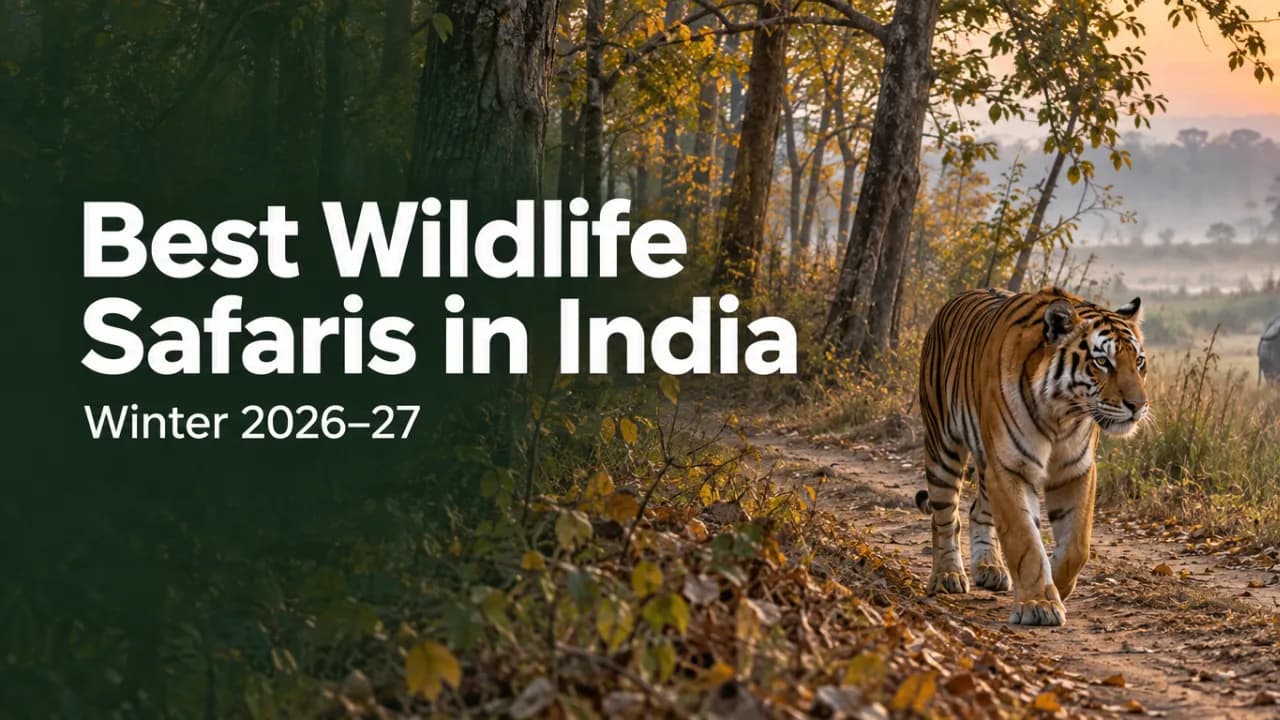
From the tiger reserves of Central India to the grasslands of Kaziranga, winter opens a varied safari season across the country.
Winter is one of the busiest periods for wildlife tourism in India. National parks that close or restrict access during the monsoon begin welcoming visitors again, temperatures become more comfortable, and migratory birds arrive at forests and wetlands across the country.
A safari cannot guarantee a tiger, lion or rhinoceros sighting. Animals move freely, and an unsuccessful search for one species can still reveal elephants, deer, wild dogs, reptiles and remarkable birdlife.
To make planning easier, these winter safari destinations have been organised by region.
North and Northwest India
1. Corbett Tiger Reserve, Uttarakhand
Nearest base: Ramnagar
Winter period to consider: November to March, depending on the zone
Corbett’s river belts, grasslands, sal forests and Himalayan foothills support tigers, elephants, deer, gharials and a considerable variety of birds. The reserve is divided into tourism zones, and their opening periods are not necessarily identical. Dhikala is known for its expansive grasslands, while Bijrani, Jhirna, Dhela and other zones offer different forest experiences.
Safaris and forest accommodation should be booked through the official Corbett Tiger Reserve website.
2. Ranthambore Tiger Reserve, Rajasthan
Nearest base: Sawai Madhopur
Winter period to consider: October to March
Ranthambore combines dry forest, lakes, rocky hills and historic ruins, including Ranthambore Fort. Apart from tigers, the reserve supports leopards, sloth bears, spotted deer, sambar, crocodiles and numerous birds.
Check destination information through Rajasthan Tourism and use the Rajasthan Forest Department’s safari page to access the authorised reservation system.
Central India
Central India has one of the country’s strongest wildlife circuits. Bandhavgarh, Kanha, Pench and Tadoba can be combined, but travellers should account for long road journeys between reserves.
3. Bandhavgarh Tiger Reserve, Madhya Pradesh
Nearest access points: Jabalpur and Umaria
Winter period to consider: October to March
Bandhavgarh is characterised by forests, grasslands and steep ridges. Its historic sites, including ancient remains and Bandhavgarh Fort, add another dimension to the landscape.
Tigers receive much of the attention, but the reserve also supports gaur, sambar, spotted deer, wild boars, langurs and migratory birds. The Tala, Magadhi and Khitauli tourism zones provide access to different parts of the reserve.
Permits and live availability can be checked through the Madhya Pradesh Forest Department booking portal. Madhya Pradesh Tourism also provides an official guide to Bandhavgarh.
4. Kanha Tiger Reserve, Madhya Pradesh
Nearest major access points: Jabalpur, Raipur and Nagpur
Winter period to consider: October to March
Kanha is known for its sal forests, meadows and broad stretches of central Indian woodland. Apart from tigers, it is closely associated with the conservation of the hard-ground barasingha.
Safari permits are available through the official Madhya Pradesh Forest Department portal.
5. Pench Tiger Reserve, Madhya Pradesh and Maharashtra
Nearest access point: Nagpur
Winter period to consider: October to March
Pench extends across Madhya Pradesh and Maharashtra. Its teak forests and open areas support tigers, leopards, wild dogs, gaur, deer and diverse birdlife. Pench is accessible from Nagpur and can be combined with Kanha or Tadoba as part of a longer wildlife itinerary.
The Maharashtra Pench Tiger Reserve publishes safari timings, gate details and a booking link. Permits for the Madhya Pradesh side are handled through the MP Forest Department portal.
Western India
6. Gir National Park, Gujarat
Nearest base: Sasan Gir
Winter period to consider: November to March
Gir is the only natural habitat of the Asiatic lion. Its dry deciduous forest and scrubland support leopards, deer, antelope, crocodiles and many species of birds. The Gir Jungle Trail provides guided vehicle safaris through designated forest routes.
Devalia Safari Park is a separate interpretation zone and should not be confused with the main jungle safari.
Book only through the official Gir permit system.
Northeast India
7. Kaziranga National Park, Assam
Nearest major access points: Jorhat and Guwahati
Winter period to consider: November to March
Kaziranga’s grasslands, wetlands and woodland create an experience very different from the dry forests of central and western India.
The park is particularly important for the greater one-horned rhinoceros. Visitors may also encounter wild elephants, buffaloes, swamp deer and a wide range of resident and migratory birds. Jeep safaris operate through different ranges, each with its own terrain and wildlife possibilities. Staying for two or three nights allows visitors to explore more than one section of the park.
Assam Tourism identifies November to April as the preferred visiting period.
South India
8. Periyar Tiger Reserve, Kerala
Nearest base: Thekkady
Winter period to consider: November to March
Periyar offers a different kind of wildlife experience. Instead of relying only on an open-vehicle safari, visitors can explore the reserve through authorised boat trips, guided walks, bamboo rafting and other controlled ecotourism programmes.
From Periyar Lake, travellers may see elephants, sambar, gaur, wild boars, otters and waterbirds along the shoreline. A tiger sighting is rare and should not be treated as the purpose of the boat trip.
The official Periyar Tiger Reserve publishes activity and booking information. Its boat trips last approximately 90 minutes, and passengers must follow reporting and life-jacket requirements.

Which Region Should You Choose?
North India works well for travellers combining a safari with Delhi, Jaipur or the Himalayan foothills.
Central India offers the strongest multi-reserve circuit. Kanha, Bandhavgarh, Pench and Tadoba can be combined, although sufficient travel time is essential.
Gir is the clear choice for travellers interested in the Asiatic lion, while Kaziranga provides a distinctive grassland safari centred on the greater one-horned rhinoceros.
Periyar is better suited to travellers who want a slower forest experience that can include boating, walking and birdwatching.
Book the Safari Before the Hotel
For popular reserves, the permit- not the hotel room- is often the real constraint. Confirm the safari date, gate, zone and visitor details before paying for accommodation.
Before booking:
Use only the forest department or reserve’s official portal.
Check whether guide and vehicle charges are included.
Enter identification details accurately.
Carry the same identification used for the reservation.
Confirm the reporting gate before selecting a hotel.
Read the cancellation policy.
Never pressure a driver to chase or crowd an animal.
Keep noise low and remain on authorised routes.
A Safari Is More Than a Tiger Sighting
A tiger crossing a forest track or a lion resting in the open can become the defining moment of a trip. But wildlife sightings cannot be ordered with a permit. The experience may instead be an alarm call echoing through Kanha, a rhinoceros emerging from Kaziranga’s grass or elephants appearing beside Periyar Lake. Travellers who arrive with patience usually leave with a better understanding of the landscape- even when its most famous resident remains out of sight.
Park access, zones, timings, fees and safari availability may change because of weather, forest conditions or official orders. Verify all details through the relevant government portal before booking.