Fake Concert Tickets in India 2026: How to Spot a Scam Before You Pay
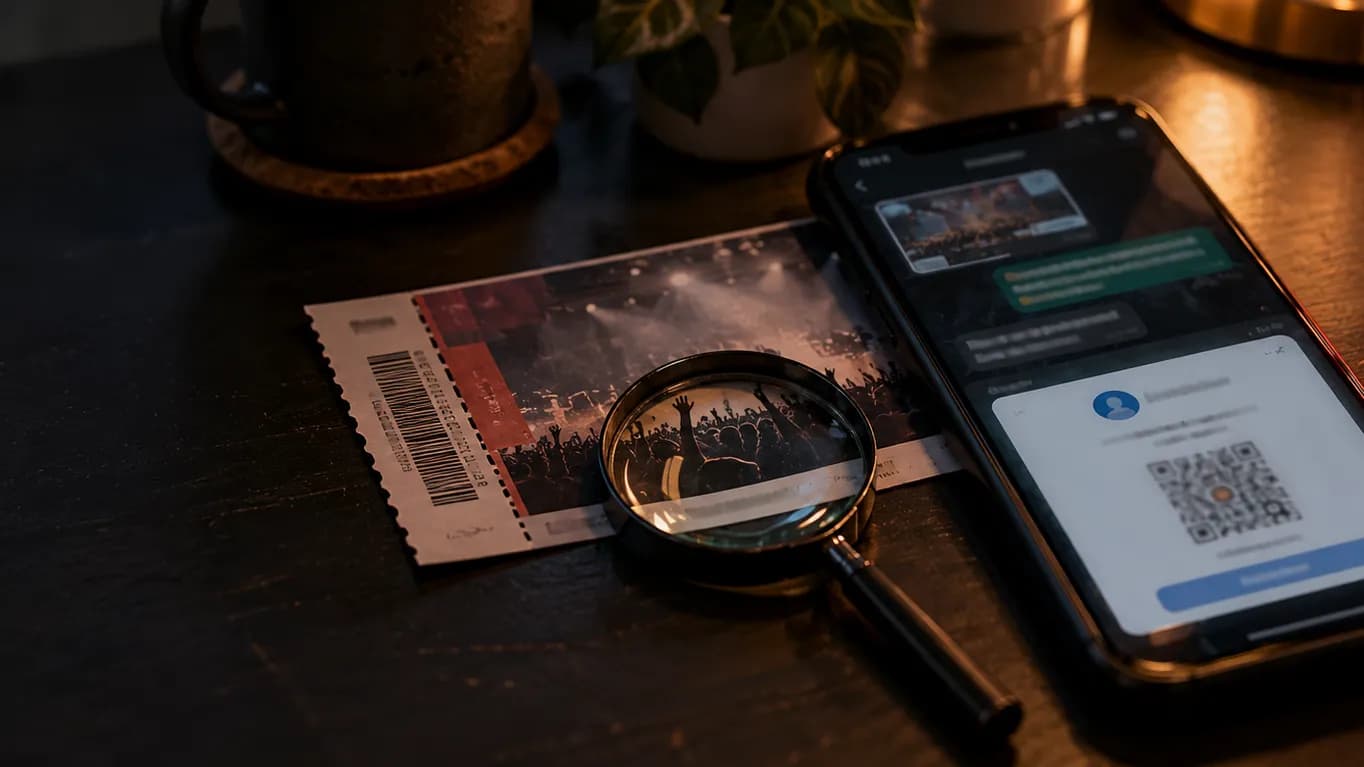
A convincing ticket or payment screen does not guarantee genuine concert entry. Buyers should verify the official booking route before paying. · Image: AI-generated illustrative image
Buying tickets for Diljit Dosanjh, Arijit Singh, Guns N’ Roses, Rolling Loud or Lollapalooza? Check the official booking links and warning signs before sending money to anyone.
Last updated: 28 October 2026

A message appears on Instagram: “Two tickets available. Selling at cost. DM urgently.”
The profile looks real. The seller shares a booking screenshot, explains why they cannot attend and promises to transfer the ticket immediately after receiving payment. It may be genuine. It may also be a fake ticket, an edited confirmation or the same genuine ticket being sold repeatedly to different buyers.
Popular concerts create the ideal conditions for this kind of fraud. Tickets sell quickly, buyers fear missing out and private sellers know that someone under pressure is less likely to stop and verify the details. The safest rule remains simple: begin with the artist or organiser’s official page and follow the ticket link published there.
Fake concert-ticket cases have already been reported in India
Before Diljit Dosanjh’s 2024 Delhi concert , police arrested a man accused of selling 69 fake tickets to a buyer who had paid approximately ₹4.78 lakh. In Chandigarh, a student allegedly paid ₹8.22 lakh after being promised 98 tickets for Diljit’s December 2024 concert. According to the reported FIR, eight tickets were eventually supplied and found to be fake.
A more elaborate method involved a website designed to resemble Zomato’s ticketing platform. In May 2026, Gurugram Police arrested a web designer accused of helping create the imitation website in connection with fraudulent ticket sales for a 2024 Diljit concert.
The Enforcement Directorate has also said that investigations into the unlawful sale of Coldplay and Diljit concert tickets identified people offering legitimate and fake tickets through Instagram, WhatsApp and Telegram. Its referred to multiple complaints and FIRs. These are reported allegations and investigations. Guilt is determined through the legal process.
How fake concert tickets are commonly sold
The “spare ticket” story: A seller claims that a friend cancelled, their group bought an extra ticket or they can no longer attend. That explanation may be completely genuine. The problem is that a believable story does not prove that the seller owns a valid and transferable ticket.
An edited booking screenshot: A screenshot can be altered within minutes. Names, dates, ticket categories, seat numbers and payment details can all be changed. Even an authentic screenshot is not conclusive. The same confirmation can be shown to several buyers, while only one valid ticket- or no transferable ticket at all- exists.
A copied ticketing website: A fraudulent page may reproduce the logo, colours and design of a familiar platform. The web address may differ from the genuine one by only a letter, symbol or unfamiliar extension. Instead of opening a payment link received through a message, visit the artist’s or organiser’s verified page yourself and follow its published booking link.
A fake upgrade or guest-list offer: A stranger may promise a better section, backstage access, a meet-and-greet or entry through an unofficial guest list. Some events genuinely sell premium experiences. Those packages should appear through an official event channel or be confirmed directly by the organiser.
Pressure to pay immediately: Statements such as “another buyer is waiting,” “price increases in ten minutes” or “send an advance to hold it” are intended to shorten the time available for verification. Urgency imposed by an unknown seller is a reason to pause.
Warning signs before making a payment
Be particularly cautious when a seller:
Contacts you unexpectedly through Instagram, WhatsApp or Telegram
Requests payment to a personal UPI ID or bank account
Asks for an advance before sharing verifiable details
Sends only screenshots or screen recordings
Uses a misspelt or unfamiliar website address
Refuses to explain how the ticket will be transferred
Claims to guarantee admission despite not representing the organiser
Offers an unofficial upgrade, guest-list place or backstage pass
Requests payment through gift cards, cryptocurrency or another unusual method
Becomes aggressive when you ask questions or request time to verify the offer
One warning sign does not automatically establish fraud. Several appearing together should be treated seriously.
What to check before buying a concert ticket
Start with the official event channel: Find the artist’s, festival’s or organiser’s verified website or social-media account. Use the booking link published there. For example, current official event pages direct buyers to platforms such as BookMyShow, District or thumpN, depending on the particular concert. This does not mean every event on those platforms follows identical rules. Always check the specific event page.
Read the transfer conditions: Some events issue mobile tickets. Others deliver physical tickets or wristbands to the original buyer. Certain tickets may not be transferable at all. A booking screenshot in someone else’s name does not necessarily provide a valid right of entry.
Do not assume resale platforms are authorised: A ticket appearing on an international or domestic resale marketplace does not automatically mean the event organiser recognises the transaction. Check whether the event permits resale or transfer before paying. If that information is unavailable, the risk remains with the buyer.
Use the official checkout: Paying through the authorised platform creates a clearer transaction record and provides access to its support process. A direct payment to a stranger through UPI or bank transfer usually offers fewer protections.
Keep the complete record: Save the seller’s profile, phone number, payment request, messages, web address and transaction reference. Do not delete the conversation if something goes wrong.
What to do if you have bought a fake ticket
Act quickly, particularly if the payment was made electronically.
Call the national cybercrime helpline at 1930.
File a complaint at the official National Cyber Crime Reporting Portal.
Contact your bank, card issuer or UPI provider and report the transaction as fraudulent.
Preserve screenshots, payment references, phone numbers, URLs and messages.
Report the seller’s profile to the social-media or messaging platform.
Inform the genuine ticketing platform if its name, logo or website has been impersonated.
Follow any direction to file a complaint with the appropriate police station.
Reporting does not guarantee recovery. Prompt action may, however, assist banks and authorities attempting to trace or stop the transferred funds. For the complete reporting process, read India News Grid’s guide: How to Report Cyber Fraud in India: 1930 Helpline, Online Complaint and Next Steps.
The check that matters most
A polished screenshot, convincing explanation or active social-media profile cannot guarantee that a ticket is genuine. Before paying, ask one question: can the purchase and transfer be completed through a process recognised by the event organiser? If the answer is unclear, do not allow the fear of missing a concert to turn an uncertain ticket into a certain financial loss.
Disclaimer: This article provides general cyber-safety information. Event organisers may follow different ticketing, resale and transfer rules. Confirm the applicable conditions through the relevant artist, organiser or official event page before purchasing. India News Grid is not affiliated with any ticketing platform or concert organiser mentioned