How Automotive In-Cabin Sensing Technology Is Creating Smarter Business and Technology Experiences
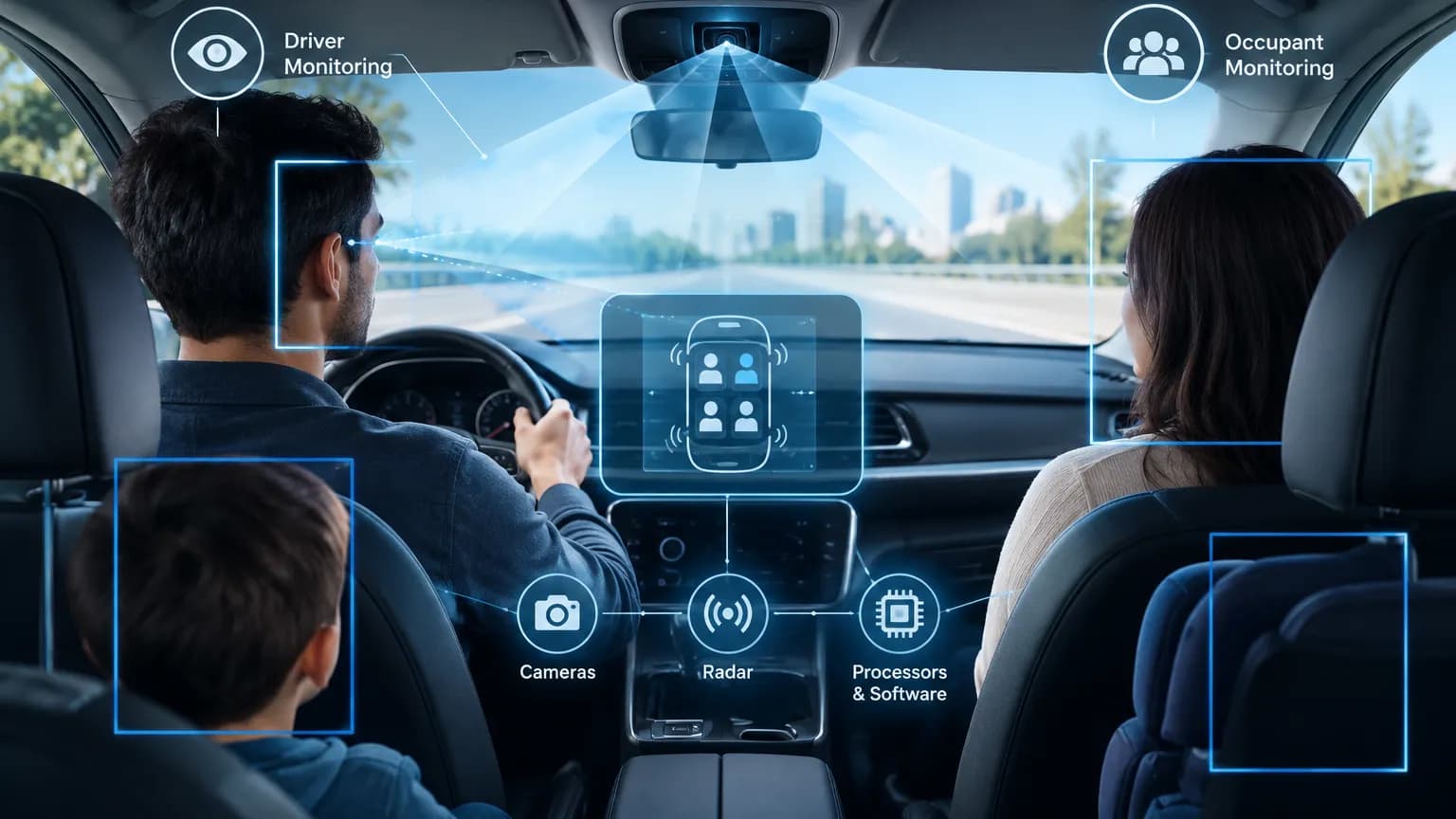
Modern vehicles increasingly function as sensing platforms that combine cameras, radar, processors, and software to interpret conditions inside the cabin. In-cabin sensing systems can monitor driver attention, identify certain forms of distraction, detect occupants, and provide information that may support safety-related functions. Their effectiveness, however, depends on sensor accuracy, software performance, environmental conditions, data processing, and how collected information is managed.
According to the National Highway Traffic Safety Administration (NHTSA), distracted driving was associated with 3,275 fatalities in the United States in 2023. NHTSA also estimated 324,819 people were injured in distraction-affected crashes during the same year. The agency notes that distracted-driving data can be affected by differences in reporting practices among jurisdictions. These limitations are important when interpreting crash statistics and considering the potential role of driver-monitoring technologies.
A Growing Technology Segment
A 2025 industry forecast for automotive in-cabin sensing technology estimates that the global segment was valued at approximately $5.8 billion in 2025 and could reach $17.2 billion by 2034, representing a projected CAGR of 12.8% from 2026 to 2034. These figures represent forecasts rather than observed outcomes. Actual development may differ depending on vehicle production, technology costs, regulatory requirements, adoption levels, and system performance.

Automotive in-cabin sensing combines several hardware and software components. Cameras can provide information about facial orientation, gaze direction, head position, and other visible characteristics. Radar can detect movement under conditions in which optical systems may be less effective, while time-of-flight technologies can provide information about occupant position and three-dimensional space. Processing hardware can then interpret these inputs and determine whether a particular response is appropriate.
The combination of these technologies does not automatically guarantee accurate detection. Performance can vary according to lighting, occupant position, sensor placement, software algorithms, and other conditions inside the vehicle.
Driver Monitoring as a Safety Layer
Driver monitoring systems (DMS) are designed to identify indicators associated with reduced attention or alertness. Depending on the system, cameras may monitor gaze direction, eyelid movement, head position, or other observable characteristics. Software can evaluate these signals against predefined conditions and generate an alert when a defined threshold is reached.
The technology should not be treated as a direct measurement of driver intent or mental state. A change in head position or gaze does not necessarily indicate unsafe behavior, while an actual distraction event may not always be detected. This creates a need for testing that evaluates both false alerts and missed events under realistic operating conditions.
The distracted-driving figures reported by NHTSA illustrate the underlying safety concern, but crash statistics alone cannot establish how much a particular driver-monitoring system would reduce crashes. Demonstrating such an effect would require appropriate testing and real-world evaluation.
Occupant Monitoring Expands the Cabin's Role
Occupant monitoring systems (OMS) extend sensing beyond the driver's position. Interior cameras and other sensors can provide information about the number, location, posture, and movement of occupants.
This information may support functions associated with seat-belt use, occupant classification, child-presence detection, airbag strategies, or other vehicle responses. The suitability of a particular application depends on the accuracy of the sensing system and the requirements of the vehicle architecture.
Occupant monitoring also introduces data-governance considerations. Information collected inside a vehicle can relate directly to individuals and their behavior. System designers therefore need to consider data minimization, access controls, retention periods, security measures, and applicable privacy requirements alongside technical performance.
Sensor Fusion Improves Context
Individual sensing technologies have different limitations. Cameras can be affected by glare, poor illumination, occlusion, sunglasses, and changes in occupant position. Radar can detect movement in conditions where optical sensors may encounter difficulties, but it does not provide the same visual information as a camera.
Sensor fusion can combine different types of information to provide a broader representation of cabin conditions. However, adding sensing technologies also increases hardware requirements, processing demands, calibration needs, software complexity, and validation work.
The objective is therefore not necessarily to maximize the number of sensors. A more relevant consideration is whether the selected combination can provide sufficiently reliable information for the intended application under the conditions in which the vehicle will operate.
Edge Processing and Data Architecture
Response time can be important for applications that provide driver warnings or initiate other safety-related actions. Edge processing allows some sensor information to be analyzed within the vehicle instead of continuously transmitting raw data to an external system.
Local processing can reduce transmission requirements and may limit the amount of cabin information that leaves the vehicle. However, the privacy implications depend on the system architecture, including what information is collected, how long it is retained, who can access it, and whether processed or raw information is transmitted.
Privacy therefore needs to be considered as part of the system architecture rather than as a separate feature added after deployment.
Evidence Behind the Safety Problem
NHTSA's 2023 distracted-driving information provides an indication of the scale of the safety issue in the United States. The agency reported 3,275 fatalities associated with distracted driving and estimated 324,819 injuries from distraction-affected crashes in 2023.
These figures provide context for the continued attention given to driver distraction, but they do not demonstrate that in-cabin sensing technology will produce a specific reduction in crashes or injuries. Establishing such an effect would require technology-specific testing, field evidence, and longer-term assessment.
Potential Technology Applications
In-cabin sensing may have applications across several parts of the automotive ecosystem, although the suitability of each application depends on technical, regulatory, and operational factors.
Fleet operators could potentially use driver-monitoring information for safety training or coaching where such practices are permitted and appropriately disclosed. Any implementation would need to consider employee privacy, data governance, system accuracy, and the consequences of incorrect alerts.
Insurance-related applications may also be considered, but the use of driver-attention information would require assessment of data quality, regulatory requirements, consent, and the methodology used to interpret the information.
For vehicle manufacturers and component suppliers, sensing data can support system validation by helping engineers examine false positives, missed events, environmental limitations, and differences between controlled testing and real-world operation. These applications concern technology development and assessment rather than evidence of a guaranteed commercial return.
A Practical Implementation Framework
Organizations evaluating in-cabin sensing systems can consider several stages before wider deployment:
Define the application: A system designed to identify driver fatigue has different requirements from one designed to detect occupancy or seat-belt conditions.
Evaluate performance: Testing should consider detection accuracy, false-positive rates, missed events, response time, and user acceptance.
Establish data controls: Organizations should define rules covering data collection, storage, access, processing, retention, and deletion.
Test real-world conditions: Evaluation should include different lighting conditions, seating positions, clothing, eyewear, occupant characteristics, and driving environments.
Separate forecasts from evidence: Industry projections describe expected development; they do not demonstrate that a particular system has achieved a specific safety or commercial outcome.
This approach can help distinguish technology capability from assumptions about its eventual impact.
Key Challenges
Accuracy remains one of the central technical challenges. Excessive warnings can contribute to alert fatigue, while missed events can reduce confidence in the system. Both issues can become more significant when systems are expected to operate across different vehicles, occupants, lighting conditions, and driving environments.
Cost is another consideration. Cameras, radar sensors, processors, software, calibration, validation, cybersecurity, and supporting vehicle electronics all contribute to system complexity. The resulting cost and performance balance may differ among vehicle categories and applications.
Privacy and cybersecurity introduce additional requirements. Cabin systems can process information relating to drivers and passengers, making access controls, secure software updates, data minimization, and transparent communication important considerations. These measures can reduce certain risks, but they do not eliminate them entirely.
The Road Ahead
In-cabin sensing is extending the role of vehicle electronics from monitoring external road conditions to interpreting aspects of the vehicle's interior environment. Driver attention, occupant presence, movement, and cabin conditions can become inputs for software-based vehicle functions.
Future development is likely to depend on improvements in sensor accuracy, edge processing, software reliability, cybersecurity, privacy protection, and validation methods. Engineers will also need to evaluate performance across different lighting conditions, seating positions, occupant characteristics, and operating environments.
The central technical question is therefore not simply how many sensors can be installed inside a vehicle. It is whether the overall sensing architecture can provide sufficiently reliable information at an appropriate response time while limiting unnecessary data collection and clearly communicating its limitations.
For manufacturers, suppliers, fleet operators, insurers, and automotive technology developers, the effectiveness of in-cabin sensing will depend on measurable system performance rather than promotional claims. Combining complementary sensors, testing systems under realistic conditions, protecting sensitive information, and documenting known limitations can provide a more credible basis for evaluating how these technologies may contribute to future vehicle safety and functionality.