Is Artificial Intelligence destroying art?
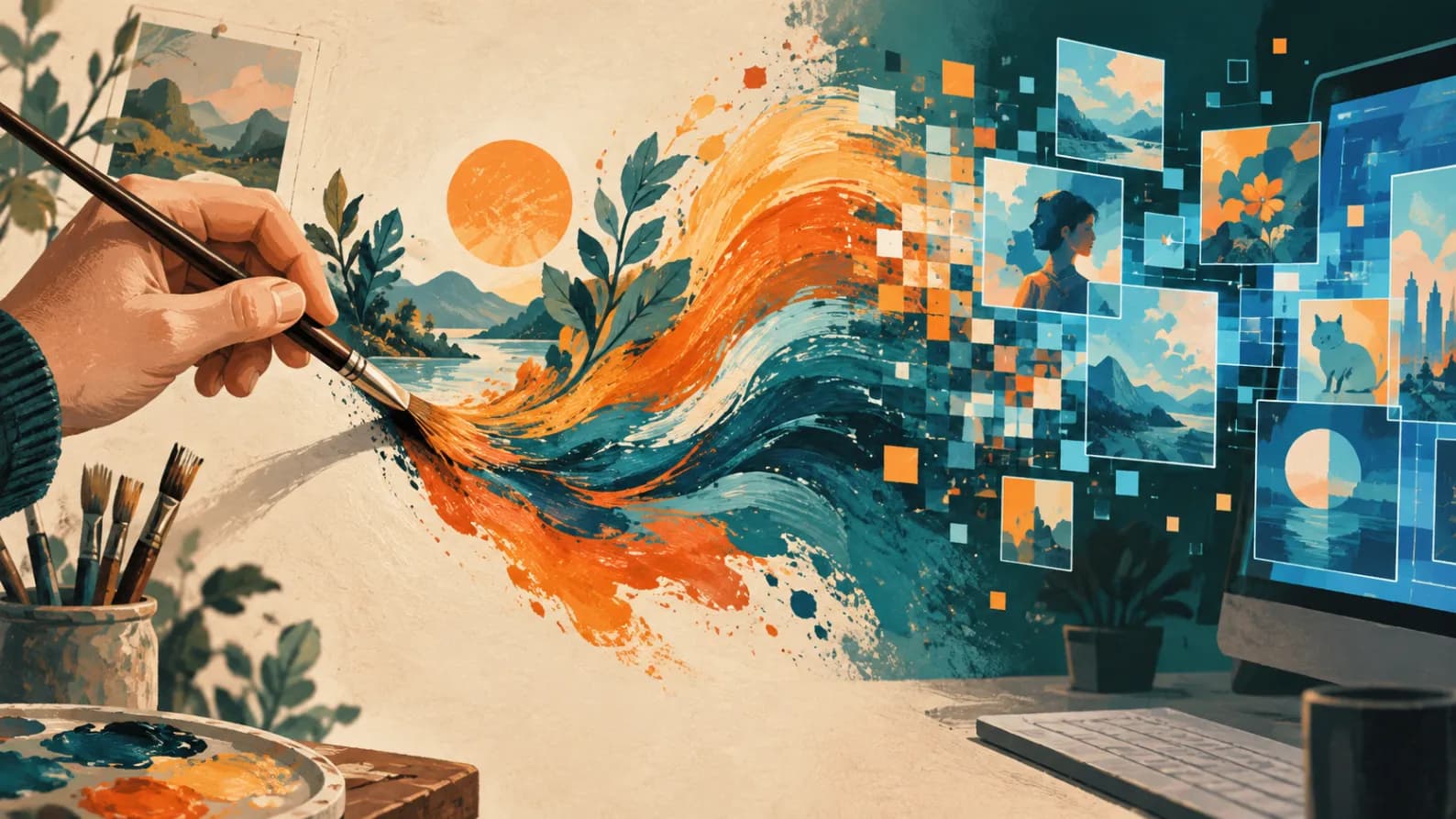
Human creativity meets machine-generated imagery, raising questions about consent, ownership and artists’ livelihoods.”
There has been a huge rise in the use of Artificial Intelligence (AI) in various sectors since the past few years. One such area where the rise in the use of AI has been significant is Art. Ever since the start of the 2020s we have seen an increased number of participation in the generation of AI images and art. From Twitter to Instagram to TikTok and even Facebook has seen a rise in the level of AI generated content. While it is easy to look at this technological marvel with rose-tinted glasses, it is important to note that this also brings forth multifaceted ethical issues related to the production of art. The sudden and rapid rise in the use of AI in art has posed incredible hardships for artists who use social media platforms to express their creativity.
How AI works: Whenever art is created by AI, it is not generated out of thin air. Artificial intelligence uses an input in order to produce an output. So, generative AI tools machine-learning algorithms to collect large amounts of data points. This data, which can be in the form of pictures, animation, photographs, illustrations etc is then fed to the machine system which produces a new image with the help of elements used to replicate human patterns of art. Whenever a prompt is entered into the algorithm, it uses the previously learned patterns to create a brand new image.
The issue with AI: The first and foremost concern about the ethics of AI generated art is that it uses pre-existing material and art to train the algorithm. This means that any and every artwork available on any online platform can be used to train AI models.
These models use copyrighted images created by human artists and use them to generate similar results. This is a huge violation of not only ethics but intellectual property rights. This non-consensual act of using copyrighted data is illegal.
Another issue that arises is that these generative AI tools use the name of an artist to create content that is in similar style to them. This could lead to serious issues like reputation damage, forgery, fraud and even identity theft.
Destruction of creativity: Existence of AI Art also leads to the destruction of creativity. Since AI is not human and is not run by humans, there is no involvement of a creative process in the creation of AI art. Whenever artists create an artwork, they go through an extensive creative process which involves brainstorming, research, and analysis. This is what gives an art a unique, human touch. Even when taking inspiration, Humans modify their creations according to their own preferences and ideas. This is what makes the process of creating art so unique and human. This however is not possible with AI as AI only works to develop a perfect replica of the data that is fed to it resulting in mindless and indistinguishable copies of the same artwork.
Economic problems: Here's another issue that arises with the escalating use of AI in art which is the issue of monetary gain. Many artists use their art as a way to earn money. With the use of AI, it becomes harder for artists to earn profit from their creations. Artists who use commissions to earn money on social media simply do not get enough engagement with their content since online spaces are flooded with AI generated art.
Depletion of Jobs: Introduction of AI in the arts sector has caused a myriad of problems. One of such problems is the reduction of employment opportunities for young artists and designers. This not only includes traditional artists but also graphic designers and animators whose jobs have now been threatened by AI. Companies in future may use AI as an alternative to human designers and artists so they don't have to compensate them. Even if jobs are not directly replaced, the dynamics and responsibilities in the workforce could shift drastically.
Conclusion: As Artificial Intelligence rapidly invades art and creative expression the debates on copyright, plagiarism and ethics of feeding AI the work of uncredited artists continues. Some even worry that in the near future AI might develop the ability to create artwork that could be offensive, dangerous, perpetuates stereotypes and could even entice violence and public disruption. The regulation in the use of AI is very necessary in order to protect the rights of artists and creators.
In the end, I'll just leave you with this quote by Leonardo Da Vinci, “Where the spirit does not work with the hand there is no art.”