Moovarkoil: The Stone Temple That Preserves Tamil Nadu’s History
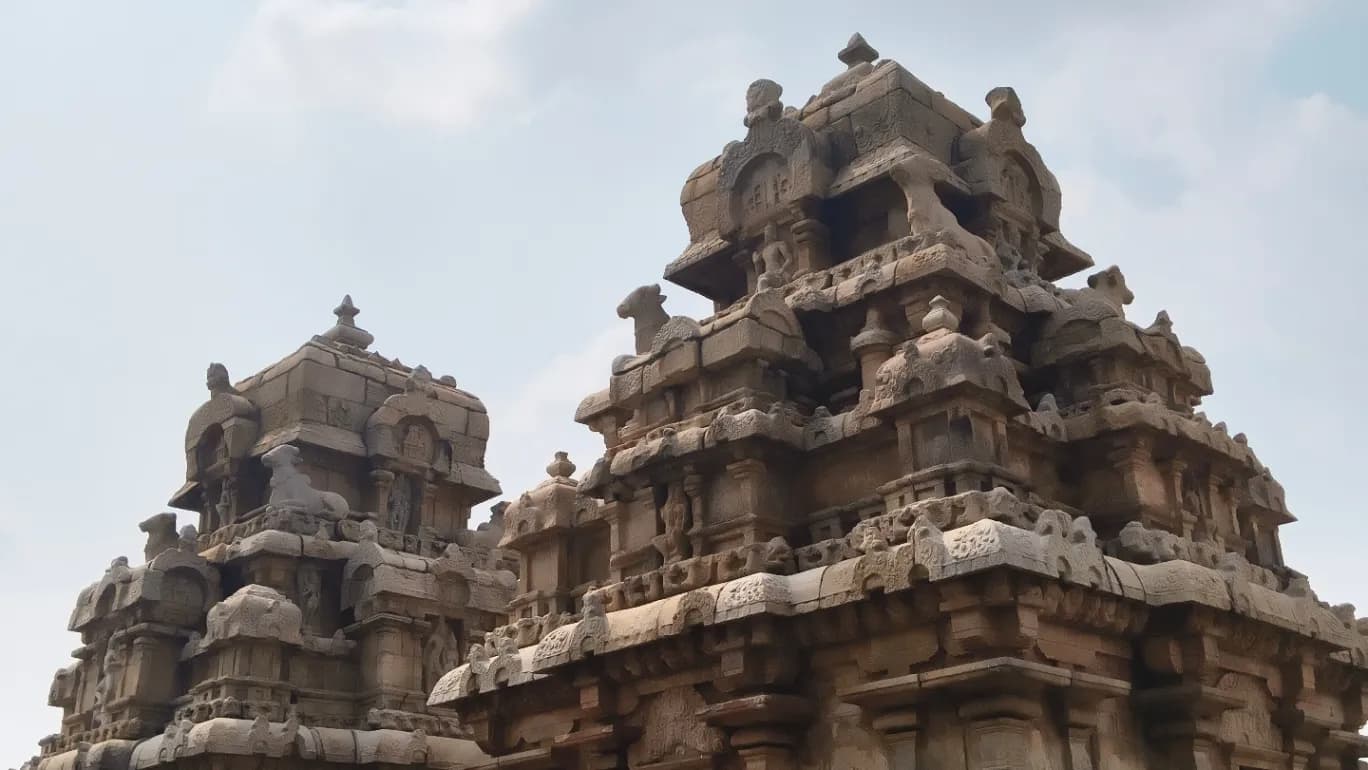
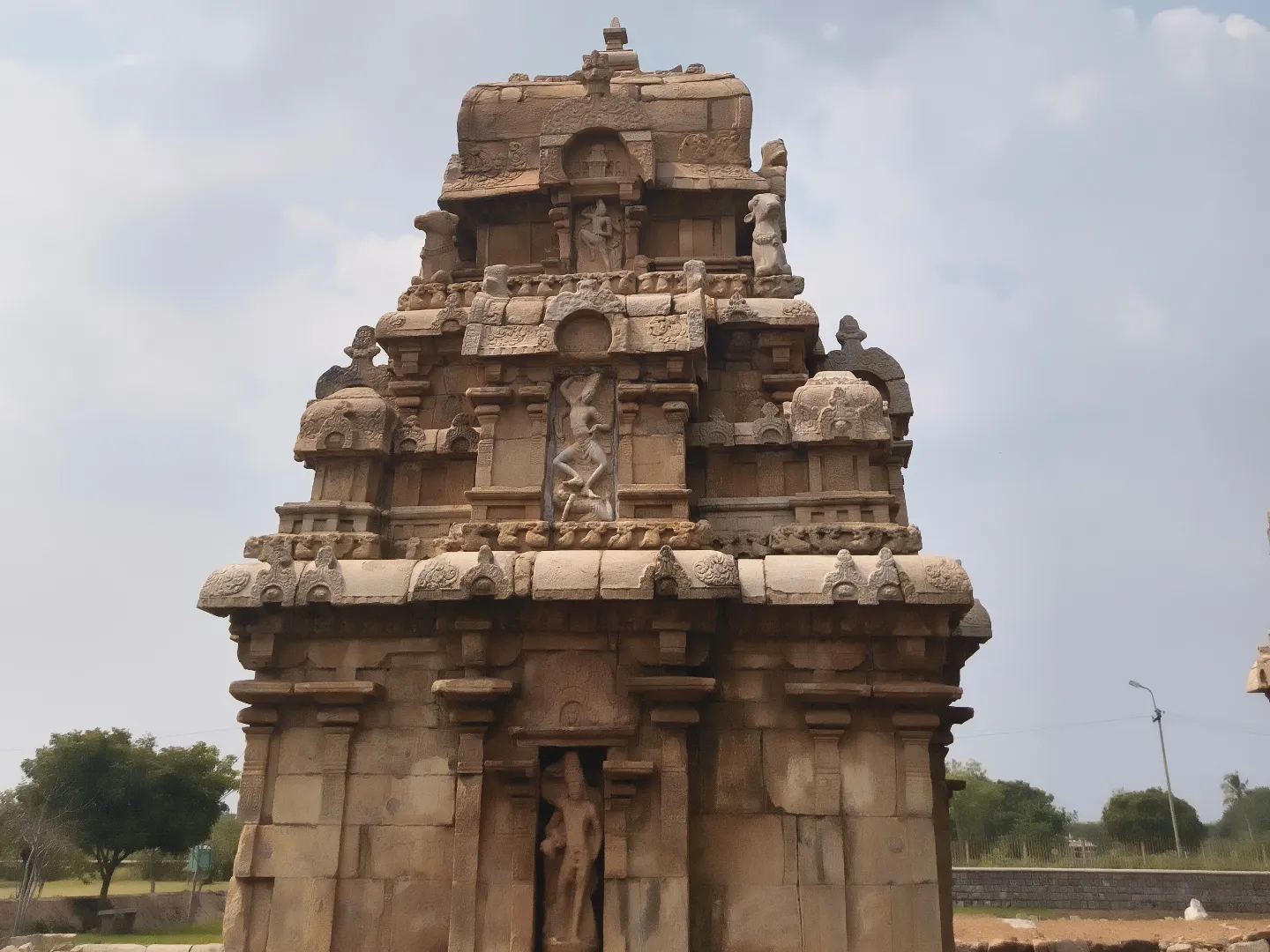
The carvings at Moovarkoil show the skill and creativity of medieval South Indian artists · Image: Allwin Rex K
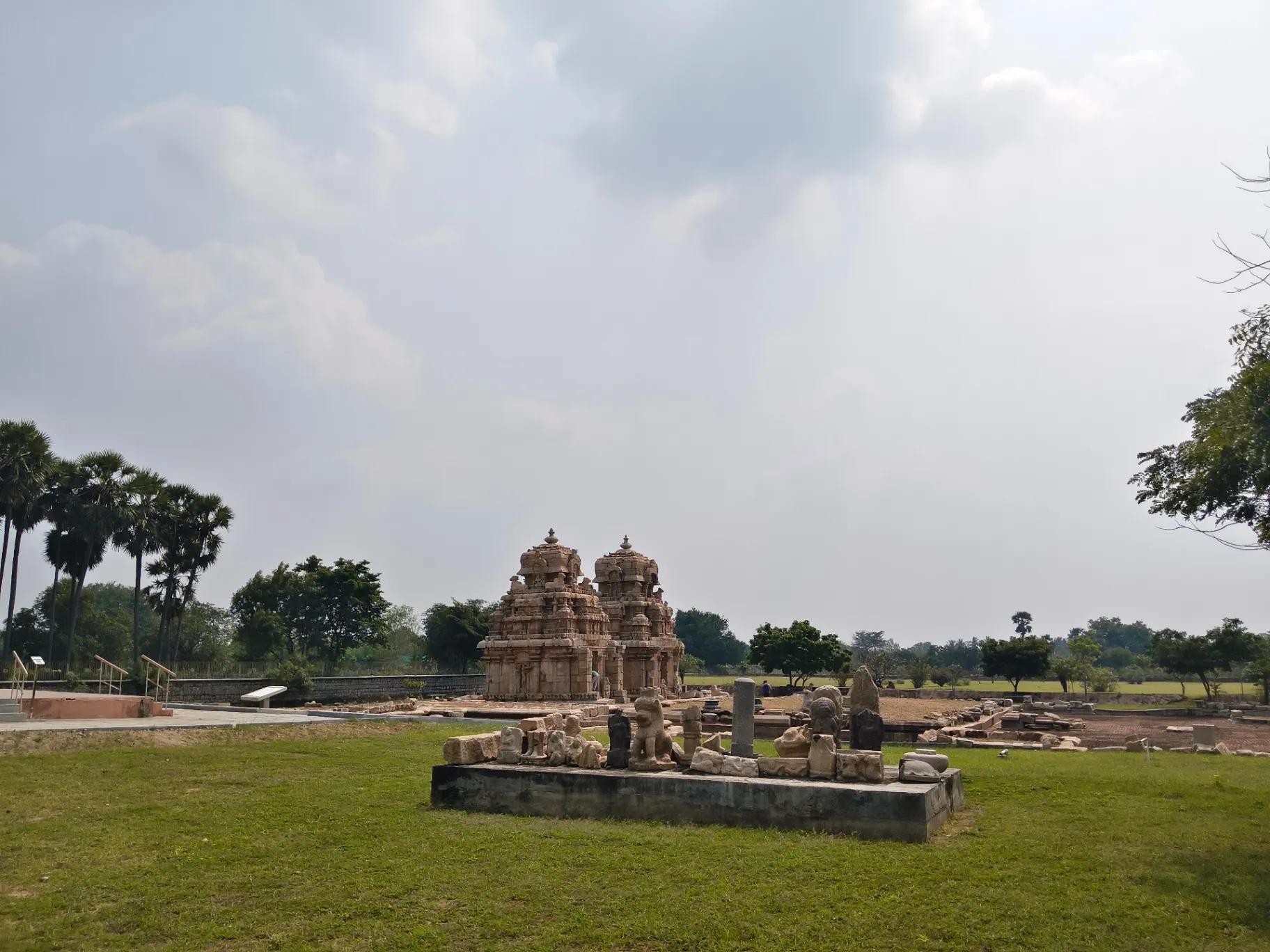
In the rural landscape of Kodumbalur, Pudukkottai district, Tamil Nadu, Moovarkoil preserves an important chapter in the history of South Indian temple architecture. Its surviving shrines and inscriptions illuminate the political authority, religious patronage and artistic traditions of the Irukkuvel chiefs during the early medieval period.
Originally comprising three principal shrines, the complex now retains two standing structures, while the northern shrine survives largely at foundation level. The monument’s significance lies in the combination of architectural evidence and a historical inscription associated with Bhuti Vikramakesari, a chief of the Irukkuvel lineage.
An Inscription That Preserves History
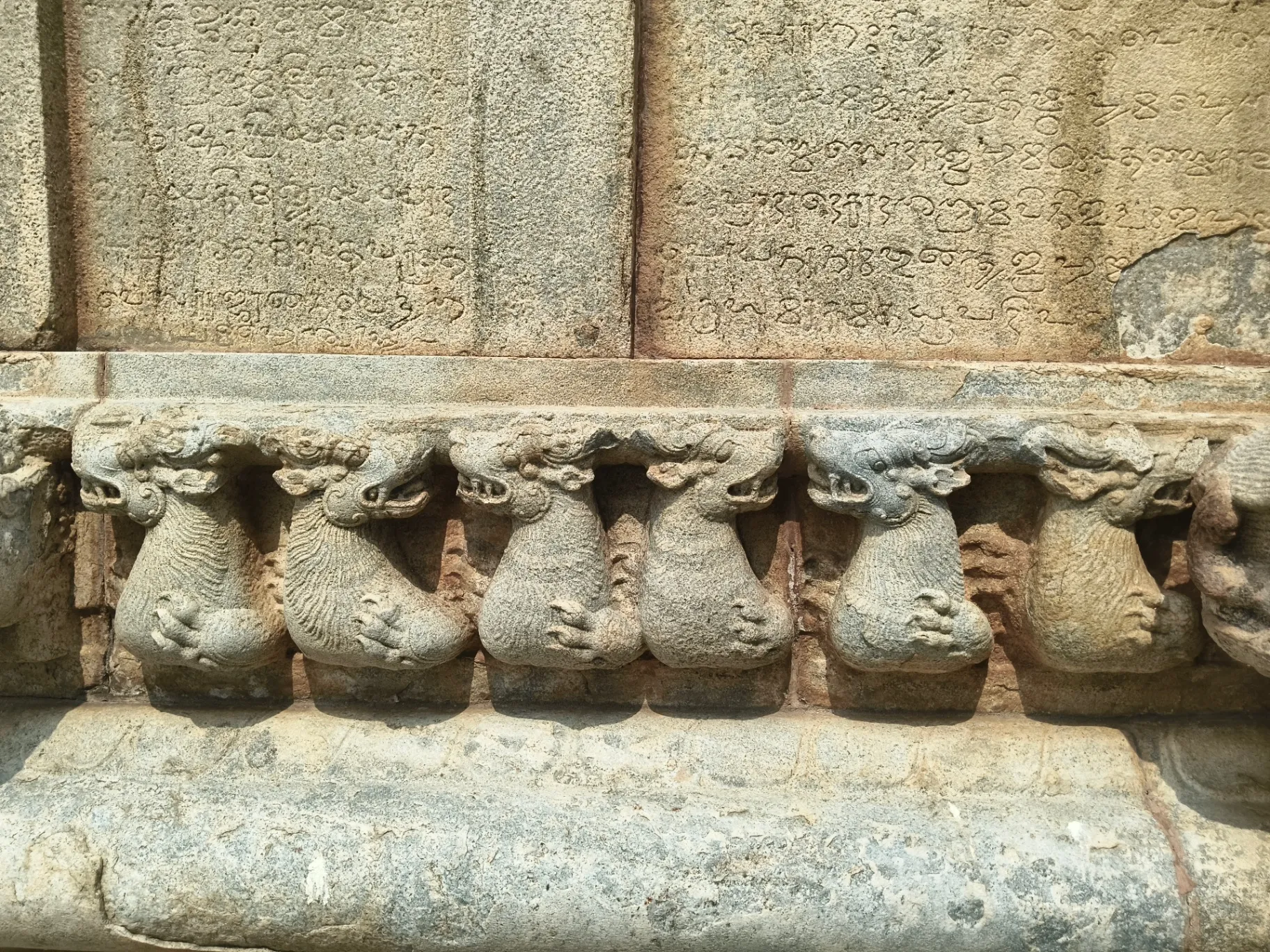
The principal inscription, published as inscription no. 129 of 1907 in South Indian Inscriptions, Volume XXIII, is written in Sanskrit using Grantha characters. It records the genealogy and achievements of the Kodumbalur chiefs and describes Bhuti Vikramakesari’s religious patronage. Read the published inscription.
According to the record, Bhuti Vikramakesari established three shrines dedicated to Maheshvara, a name for Shiva. The shrines were associated with the chief and his two queens, Karrali and Varaguna.
The inscription also describes an endowment for a matha, or religious establishment, associated with Mallikarjuna, a teacher connected with the Kalamukha tradition of Shaivism. Eleven villages were assigned to support fifty ascetics and meet specified religious needs.
These details show that temple patronage extended beyond construction. It included supporting religious institutions, maintaining ascetics and allocating resources for worship. The inscription also celebrates the ruling family’s achievements, although such commemorative claims must be distinguished from independently verified historical events.
When Was Moovarkoil Built?

The chronology of Bhuti Vikramakesari remains a subject of scholarly debate. In 1934, H. Heras proposed an earlier date for the chief, placing him approximately three centuries before the tenth-century chronology defended by other scholars.
In his 1935 article, “The Date of Bhuti Vikramakesari,” published in the Journal of the Royal Asiatic Society, K. A. Nilakantha Sastri argued for a tenth-century date and challenged Heras’s interpretation.
S. R. Balasubrahmanyam’s Early Chola Temples also discusses the chronology and architecture of the Kodumbalur temples. Read the architectural study.
The disagreement reflects the challenges of dating early medieval monuments. Historians compare inscriptions, script styles, genealogies and references to rulers to establish historical context. The tenth-century interpretation has substantial support in the cited scholarship, while the earlier proposal remains part of the historiographical debate.
Three Distinctive Architectural Features
Moovarkoil is distinguished by its original three-shrine arrangement, the remains of a common front hall and the integration of sculpture into its architectural design.
First, the three shrines were arranged as a coordinated complex. The surviving structures preserve evidence of the original plan, while the northern shrine’s remains indicate the position of the lost building.
Second, the complex included a mukhamandapa, or front hall, whose surviving foundation provides evidence of the relationship between the shrines and the larger architectural ensemble. Such halls formed part of the transition between the exterior and the sacred shrine.
Third, the surviving shrines feature carefully organised wall niches, pilasters and ornamental details. A pilaster is a shallow, pillar-like feature attached to a wall. A devakoshta is a niche designed to accommodate a religious image. Above the sanctum, the vimana forms the shrine’s architectural superstructure.
These elements demonstrate how early South Indian builders combined structural planning with ornament. Their arrangement also provides a basis for comparing Moovarkoil with other temples associated with the development of Chola architecture.
Sculpture and Religious Expression
The sculptures at Moovarkoil form an integral part of its architecture. Their placement within wall niches connects religious imagery with the design of the shrines.
Balasubrahmanyam’s Early Chola Temples documents several identifiable forms of Shiva at the site. These include Ardhanari, which combines male and female aspects; Gangadhara, depicting Shiva receiving the descent of the river Ganga; Vinadhara Dakshinamurti, associated with the vina, a traditional stringed instrument; and Gajasamharamurti, depicting Shiva defeating an elephant demon.
These identifications should be understood through the published architectural study, rather than assumed from visual resemblance alone. The same study notes that some sculptures were removed to government museums, making it important to distinguish documented images from those currently visible at the monument.
The sculptural programme demonstrates how religious ideas were expressed through posture, attributes and placement. Together, the carvings and architectural frames provide evidence of the artistic traditions associated with the complex.
Conservation and Public Understanding
Moovarkoil’s long-term preservation depends on appropriate conservation, reliable documentation and accessible historical interpretation. Claims about present structural damage, maintenance or visitor facilities should be based on recent observations or official records.
Photographic documentation could help record changes in the surviving structures, while interpretive panels could explain the inscription, the original three-shrine plan and the debate over chronology. Digital documentation would also support research and educational use.
These are recommendations, not assertions that particular conservation measures or facilities are absent. Any physical intervention should follow appropriate archaeological principles and the guidance of the authorities responsible for the monument.
A Monument That Connects Architecture and History
Moovarkoil brings together three important forms of evidence: an inscription documenting the patronage of the Irukkuvel chiefs, a distinctive architectural complex and a sculptural tradition associated with early Chola temple building.
Its historical value lies in the relationship between these elements. The inscription reveals the religious and political context of the monument, while the surviving structures preserve evidence of architectural planning and craftsmanship.
Careful documentation and responsible conservation will help ensure that Moovarkoil remains accessible to researchers, students and visitors seeking to understand the architectural history of medieval Tamil Nadu.
References
South Indian Inscriptions, Vol. XXIII, inscription no. 129 of 1907, Moovarkoil, Kodumbalur. Digital edition.
H. Heras, “The Victory of Bhuti Vikramakesari over the Pallavas,” Journal of the Royal Asiatic Society (1934), pp. 33–44. Article.
K. A. Nilakantha Sastri, “The Date of Bhuti Vikramakesari,” Journal of the Royal Asiatic Society (1935), pp. 475–481. Article.
S. R. Balasubrahmanyam, Early Chola Temples: Parantaka I to Rajaraja I, A.D. 907–985 (1971), section on Kodumbalur.
About the author
Allwin Rex K, also widely known by his literary pen name Andres De Rex, is an emerging Indian physicist, researcher, published author, and science communicator based in Tiruchirappalli, Tamil Nadu. He pursued his academic journey at St. Joseph's College (Autonomous), Tiruchirappalli, specializing in theoretical physics, astrophysics, and cosmology. Having trained at the Indian Institute of Astrophysics, his research interests span solar phenomena, dark matter, and quantum cosmology. Beyond his academic research, he serves as an editor for Iterative International Publishers and is dedicated to bridging the gap between complex science and public understanding by actively contributing to platforms like Quora and Blogger.