Severe Kidney Stone Pain: What Happens When the Stone Is Too Large to Pass on Its Own?
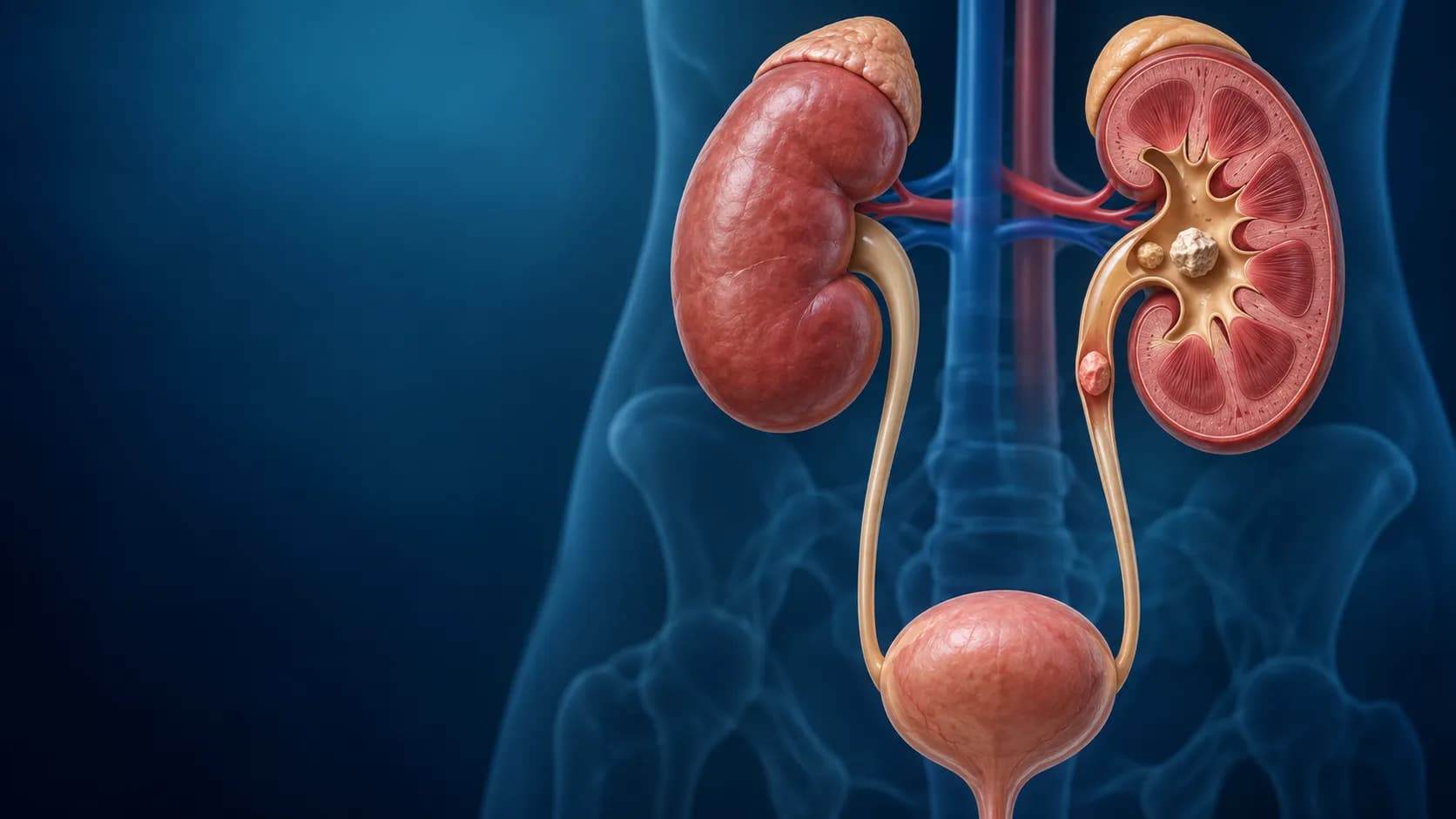
Kidney Stone
If you’ve ever experienced the intense, cramping agony of a kidney stone, you know it’s one of the most painful medical conditions out there. While many smaller stones can pass through the urinary tract without the need for a procedure, larger stones may become lodged, block the flow of urine or continue to cause significant pain. When a stone is too large to pass on its own, what happens next?
Kidney stones, also known as renus calculi are essentially hard deposits that form when certain substances in the urine start crystalizing. Urine consists of minerals like calcium, oxalate, uric acid and phosphate. In a healthy scenario, there are enough substances in the human body to help these minerals dissolve and flush out of the body harmlessly. However, in case of certain imbalances, can cause those minerals to clump together.
Kidney stones are classified based on their primary material. The most common types include calcium oxalate, uric acid, and cystine stones. Struvite stones, made of magnesium ammonium phosphate, are often linked to urinary tract infections and can grow rapidly. Cystine stones are rarer than the others, these are caused by a genetic disorder where the kidneys excrete too much of amino acid cystine.
Symptoms of Kidney Stones:
A Kidney stone can go undetected for years, that is, until it starts to move. When a stone travels into the ureter, it can cause excruciating pain that may vary in intensity. Some people even describe it as “the feeling of getting stabbed multiple times.” The pain can be accompanied by the following symptoms:

→ Bloody Urine (Hematuria)
→ Nausea
→ Vomiting
→ Burning sensation while urinating
Most of the times, Kidney stones do not require invasive treatments. Masses less than 5mm in diameter will usually pass on their own. Doctors will simply recommend increased intake of water and painkillers to subdued the pain. When the stone is too large to pass naturally, it can lead to obstruction or infection, with symptoms such as fever, chills, or cloudy, foul-smelling urine. These are indicators that immediate medical attention is necessary.
What Happens When a Stone Is Too Large?
In severe cases when the stone is too large, it can block the ureter. A ureter is the tube that carries urine from the kidney to the bladder and can cause a kidney infection and even potential kidney damage.
How do doctors determine what to do?
Once Medical professionals have determined the severity of the stone, they may choose from several treatments based on stone’s size, location, and the person’s Overall health. Doctors determine this through imaging, usually a non-contrast CT scan or KUB x-ray'' (kidney-ureter-bladder x-ray) which helps in determining if the stone is suitable for shock wave treatment.
As per the National Institute of Diabetes and Digestive and Kidney (NIDDK), Doctors can remove the kidney stone or break it into small pieces with the following treatments:
Extracorporeal Shock Wave Lithotripsy (ESWL): EWSL is a non-invasive, non-surgical procedure where medical professionals use shock waves to break up the stones in tiny fragments. The stones can easily pass through the urinary tract.
Cystoscopy and ureteroscopy: These procedures are used by urologists to examine the urinary tract. A thin, flexible scope is inserted through the urethra and bladder to reach the stone. After locating the stone, doctors use a laser. This method, known as laser lithotripsy, breaks down large stones into small pieces.
Percutaneous nephrolithotomy: This procedure is the only resort when the less invasive treatments fail or are not possible. It involves making a small incision in the back to access the kidney directly. PCNL is carried out under general anesthesia. This procedure is more invasive but effective for sizeable stones resistant to other treatments. According to Dr Matteo Bargagli of Bern University Hospital , CT evidence suggests that stone clearance rates and measures of health might be superior for PCNL compared with ureteroscopy for stones measuring 10–25 mm.
What happens after the removal of the stone?
While removing the Kidney stone treats the immediate problem, it does not resolve the underlying cause of the stone. The European Association of Urology (EAU) states that the stone composition should be assessed in order to determine patients future stone forming possibility.
After the surgery, the focus shifts to recovery and preventing recurrence. Patients should be monitored for symptoms such as fever, chills, or unusual pain can help identify infections promptly. The EAU also mentions regular blood tests to evaluate kidney performance.
Kidney stones may not always require surgery or extensive procedures, nonetheless, it is still important to be aware of the symptoms, take precautions including a healthy diet, and ample amount of hydration. Doctors also suggest to avoid food with ingredients with ingredients like sodium chloride, monosodium glutamate (MSG), and sodium nitrate. Along with this, getting regular health checkups is essential for prevention.