Fake Work-From-Home Jobs in India: Warning Signs and How to Report a Scam
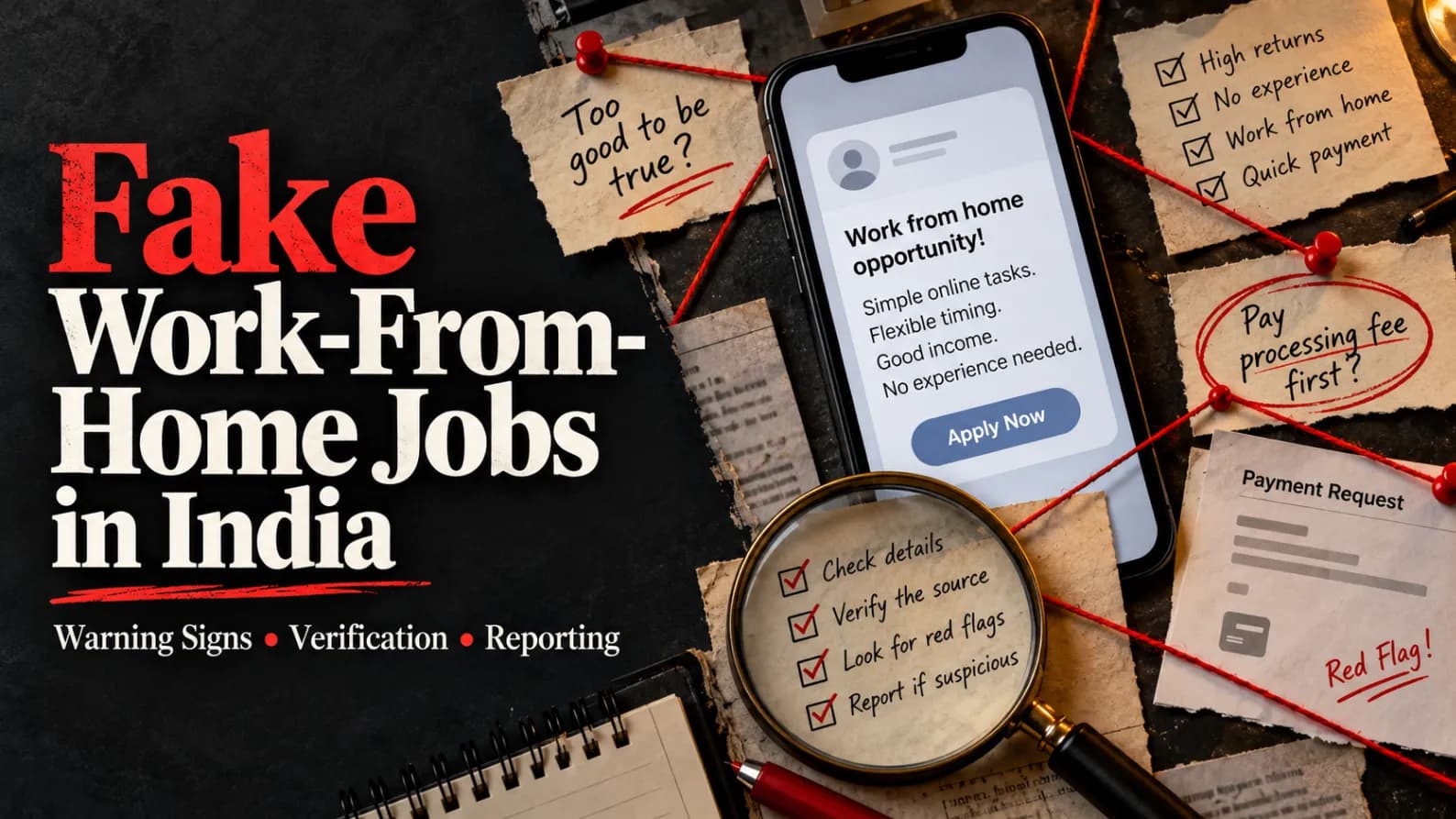
Last updated: 1 October 2026
A fake work-from-home job usually begins with an attractive promise: flexible hours, basic online tasks and good earnings without much experience. The problem often becomes visible when the applicant is asked to pay a registration fee, deposit money to unlock work or pay another charge to withdraw supposed earnings.
India’s National Cyber Crime Reporting Portal describes online job fraud as an attempt to defraud people seeking employment through false promises of better jobs or higher wages. Before paying, installing software or sharing personal documents, applicants should verify the employer independently.
How Fake Work-From-Home Job Scams Operate
Fake remote jobs appear in several forms, but these are among the most common.
Registration and training-fee scams
The applicant is offered data-entry, typing, form-filling or CAPTCHA-filling work. The recruiter then demands money for registration, training, software or access to a work platform.
The Indian Cyber Crime Coordination Centre has warned that fraudulent CAPTCHA-filling jobs may use fabricated agreements to look legitimate. Applicants complete large amounts of work but are later denied payment or asked for additional charges.
Online-task scams
A message offers payment for rating products, posting reviews, liking videos or completing other basic online tasks. The applicant may be sent to a website, app or messaging group showing earnings in an account.
When withdrawal is attempted, the person is asked to deposit money for tax, account activation, commission or processing. Paying one demand usually leads to another.
Fake offer letters
Scammers copy the logo, language and formatting of a recognised company or government organisation. They send a professional-looking offer letter and ask for a security deposit, verification fee, medical charge or equipment payment.
A convincing document is not proof of employment. The vacancy and offer letter must be verified directly with the organisation concerned.
Personal-information collection
Some fake recruiters seek Aadhaar, PAN, bank details, photographs or signatures instead of-or before-requesting money. This information may be misused for impersonation, unauthorised accounts or further fraud.
Do not share sensitive documents simply because someone claims that immediate onboarding is required.
Warning Signs of a Fake Job Offer
Treat an offer cautiously when several of these signs appear together:
The recruiter contacts you unexpectedly through WhatsApp or Telegram.
The job promises high earnings for extremely basic work.
There is no proper interview or skills assessment.
You are pressured to accept immediately.
The vacancy does not appear on the company’s official website.
The sender uses a free or misspelled email domain.
You are asked to pay for registration, training or guaranteed selection.
Payment must be made to a personal account or UPI ID.
You must deposit money before withdrawing earnings.
The job description is vague, but the income promise is specific.
You are asked for an OTP, PIN, CVV or banking password.
The recruiter sends an APK file or asks you to install an unknown application.
You are threatened with penalties for leaving the work incomplete.
Does Every Application Fee Indicate Fraud?
No. Some genuine recruitment processes, particularly government examinations, have officially notified application fees.
A legitimate fee should be stated in the official recruitment notice and collected through an authorised portal. A private recruiter requesting payment to secure selection, release an offer letter or guarantee employment is a serious warning sign.
Do not rely only on a payment link sent through a message. Open the organisation’s official website independently and find its recruitment page yourself.
How to Verify a Work-From-Home Job

Check the official careers page
Visit the company’s website without using the recruiter’s link. Search for the same vacancy in its careers or recruitment section.
Contact the company directly
Use an email address or phone number published on the official website. Ask whether the vacancy, recruiter and offer letter are genuine.
Inspect the email address
Display names are easy to copy. Check the complete email domain for added letters, hyphens, misspellings or an unrelated free-email service.
Search the recruiter’s details
Search the phone number, email address and distinctive phrases from the message. The National Cyber Crime Reporting Portal also provides a Suspect Search facility.
The repository is based on complaints received from citizens and is not exhaustive. A number or email address not appearing there should not automatically be considered safe.
Ask for clear employment information
A genuine offer should identify the legal employer, job responsibilities, reporting structure, selection process, salary terms and working arrangements. Be cautious when the recruiter provides detailed payment instructions but little information about the actual work.
For overseas opportunities, verify recruiting agents through the Ministry of External Affairs’ eMigrate portal.
What to Do If You Have Paid a Fake Recruiter
Act quickly instead of waiting for the recruiter to process a promised refund.
Call the national cybercrime helpline at 1930 immediately.
Submit a complaint on the National Cyber Crime Reporting Portal.
Contact your bank, card issuer or payment provider and identify the transaction as fraudulent.
Save the chats, emails, payment receipts, transaction IDs, account details, UPI IDs, phone numbers and website links.
Change your passwords if you shared login information or installed suspicious software.
Notify the genuine company if its name or logo is being misused.
Contact the local police if the case involves threats, identity misuse or other serious offences.
Do not delete the conversation. Screenshots showing the recruiter’s number, dates and complete messages may be important evidence.
If you have not transferred money but want to flag a suspicious offer, use the portal’s Report Suspect facility. It accepts website URLs, WhatsApp numbers, Telegram handles, phone numbers, email addresses and social-media links.
Pause Before You Pay
A genuine work-from-home opportunity should provide enough information to evaluate the employer and the work. A scam tends to focus on urgency, effortless income and the next payment.
Verify the vacancy through an independently located official channel. Never share an OTP, PIN or banking password. If money has already been transferred, call 1930 and report the incident without waiting for the recruiter to respond.
For another example of criminals using urgency and authority to obtain money, read India News Grid’s guide to digital arrest scams in India.